Signs Your Business Has Outgrown Off-the-Shelf Software
The real signs a business has outgrown generic software — manual re-entry, compounding SaaS costs, and workflows forced into the wrong tool.
DevGlim Team
September 17, 2026
Looking to build this instead of buying it? See our Custom Software Development Services service →
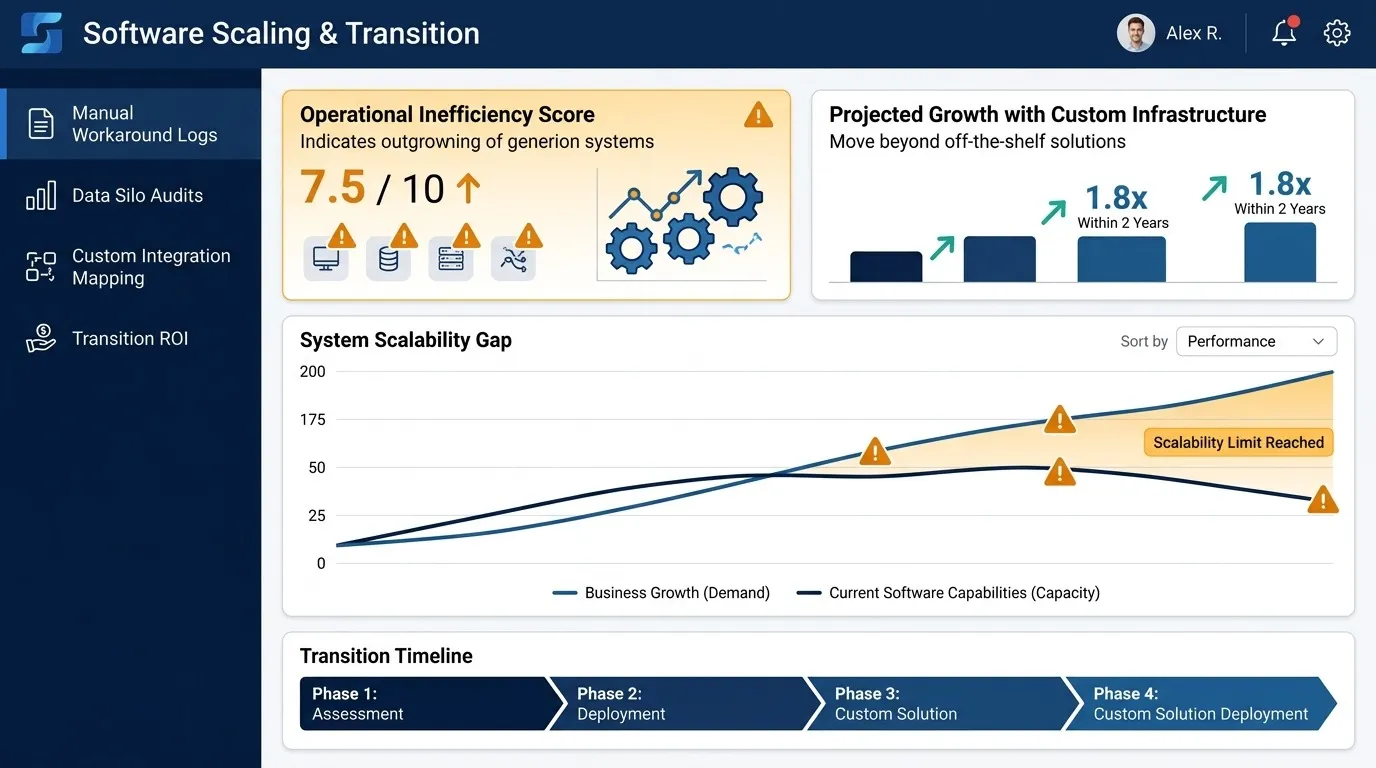
 Off-the-shelf software is a fine starting point for most businesses — until workflows become genuinely unique, or the accumulated cost of workarounds quietly exceeds what a custom build would have cost. The shift from generic tools to custom software is rarely a sudden decision; it's usually the result of months or years of accumulating friction.
The "Workaround Tax" — A Real-World Pattern
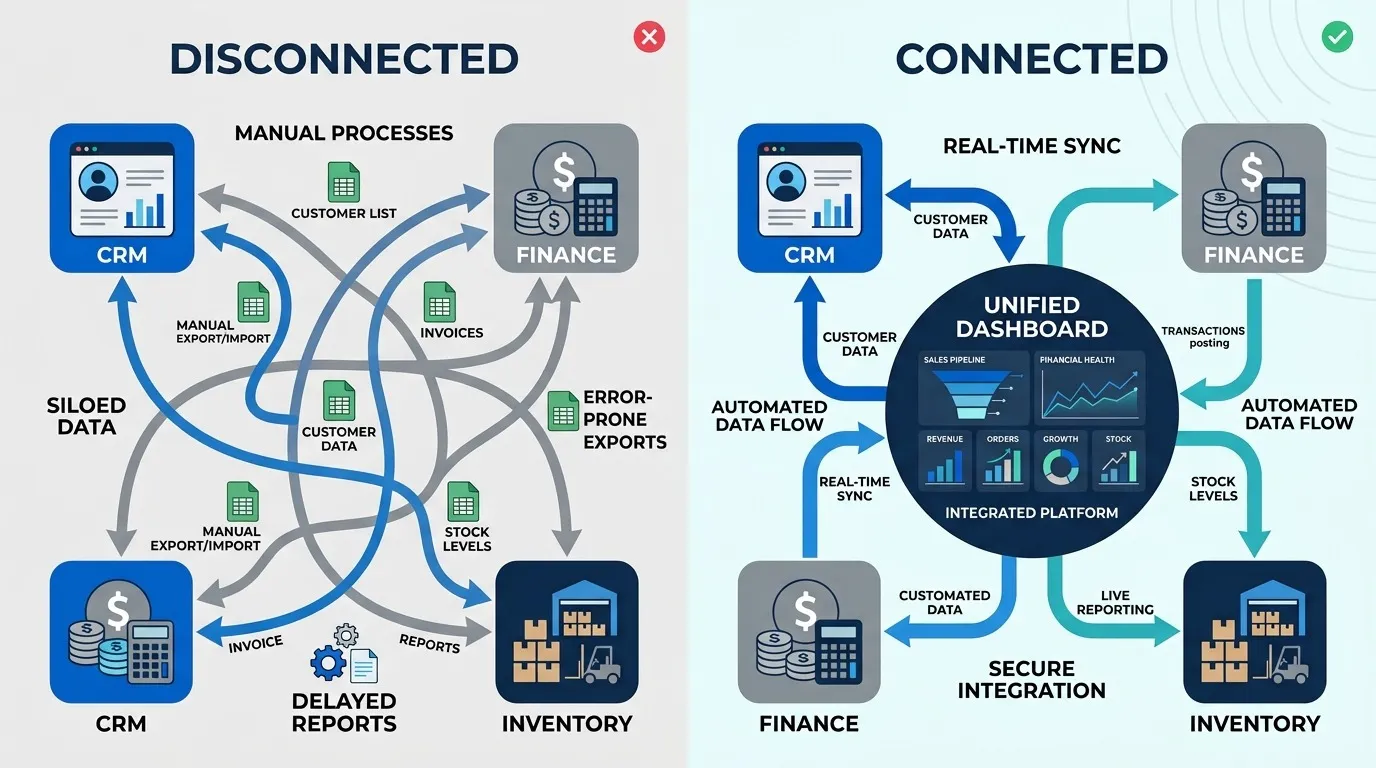
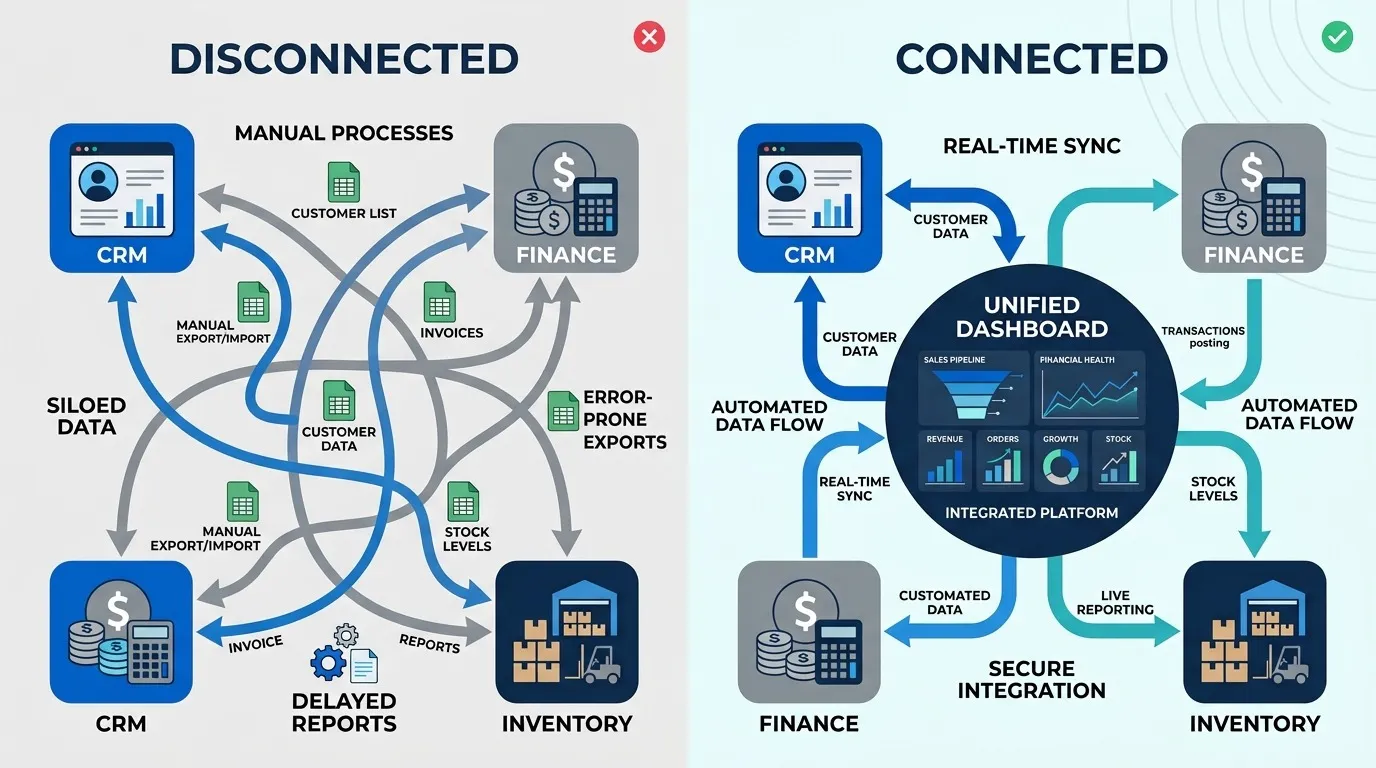
A recurring pattern shows up across businesses that eventually move to custom software: employees exporting data from one tool, pasting it into a spreadsheet, then re-entering it into another system just to make everything work together. This isn't a minor inconvenience — it's effectively paying for a custom build already, just in staff time, errors, and risk instead of a development invoice.
Deciding between off-the-shelf software and a custom build? This short guide explains which approach your answers point to, and why. Open the full-page tool.
Free tool · about 3 minutes
Custom Software vs Off-the-Shelf Decision Guide
You will get:
- A reasoned recommendation: existing software, hybrid or custom
- The answers that drove the result
- Suggested next steps
No sign-up needed to see your result. This is an indicative estimate based on the information provided. Final pricing depends on features, integrations, design complexity and project requirements.
Signs Worth Taking Seriously
1. Manual Re-Entry Between Systems
If your team regularly copies data from one tool into another by hand, that's one of the clearest signals a business has outgrown its current toolset.
2. A Critical Process Runs on a Fragile Spreadsheet
When a spreadsheet becomes so complex that only one person understands it, and the business depends on it daily, that's a genuine operational risk, not just an inconvenience.
3. Per-Seat SaaS Costs Are Compounding
Individual SaaS subscriptions often look affordable in isolation, but the combined cost across a growing team can exceed what a one-time custom build would have cost over the same period.
4. Your Competitive Edge Depends on a Non-Standard Process
If a unique approval workflow, onboarding process, or operational method is part of what makes your business competitive, forcing it into a generic tool undermines that advantage rather than protecting it.
5. Reporting Requires Manual Compilation
If getting a clear answer to "how is the business actually performing" requires manually pulling data from several places, decision-making slows down exactly when speed matters most.
When Off-the-Shelf Still Makes Sense
Not every business has outgrown generic tools, and that's fine. A useful test: if an existing tool handles the vast majority of your needs without requiring significant workarounds, it's probably still the right choice. Standard functions like basic accounting, email, or internal messaging rarely justify a custom build — the value of custom software concentrates specifically around the workflows that make your business different from a competitor's.
Our custom software development guide covers what the actual build process and costs look like once you've decided custom development is the right move, and our SaaS vs. on-premise comparison covers a related deployment decision worth considering alongside this one.
Frequently Asked Questions
Does needing custom software mean replacing everything we currently use?
No — most businesses combine both, using off-the-shelf tools for standard functions and custom software specifically for the workflows that are unique to how they operate.
Is this only relevant for large businesses?
No — small and mid-sized businesses commonly reach this point once standard applications no longer support how the business actually operates day to day.
How do I know if the cost of custom software is actually justified?
Compare the ongoing cost of workarounds, staff time, and compounding SaaS subscriptions against the one-time cost of a custom build — many businesses find the SaaS costs alone exceed the custom build cost over a few years.
Can custom software still work alongside our existing tools?
Yes — custom systems are commonly built to integrate with existing CRM, accounting, or other software rather than replacing everything at once.

Final Thoughts
The decision between off-the-shelf and custom software isn't about which is universally better — it's about recognizing when a specific workflow has outgrown what a generic tool was ever designed to handle. Once workarounds start costing more time than they save, that's usually the clearest sign it's time for a different approach.
Ready to Find Out If Custom Software Makes Sense for You?
DevGlim helps businesses figure out exactly where custom development adds real value versus where off-the-shelf tools still work fine. See our services or get in touch to talk through your specific situation.