Route Optimization Software for Delivery Businesses: Features and Costs
Better routes save fuel, time and customer complaints. Here are the features that matter and what drives the cost.
DevGlim Team
November 28, 2026
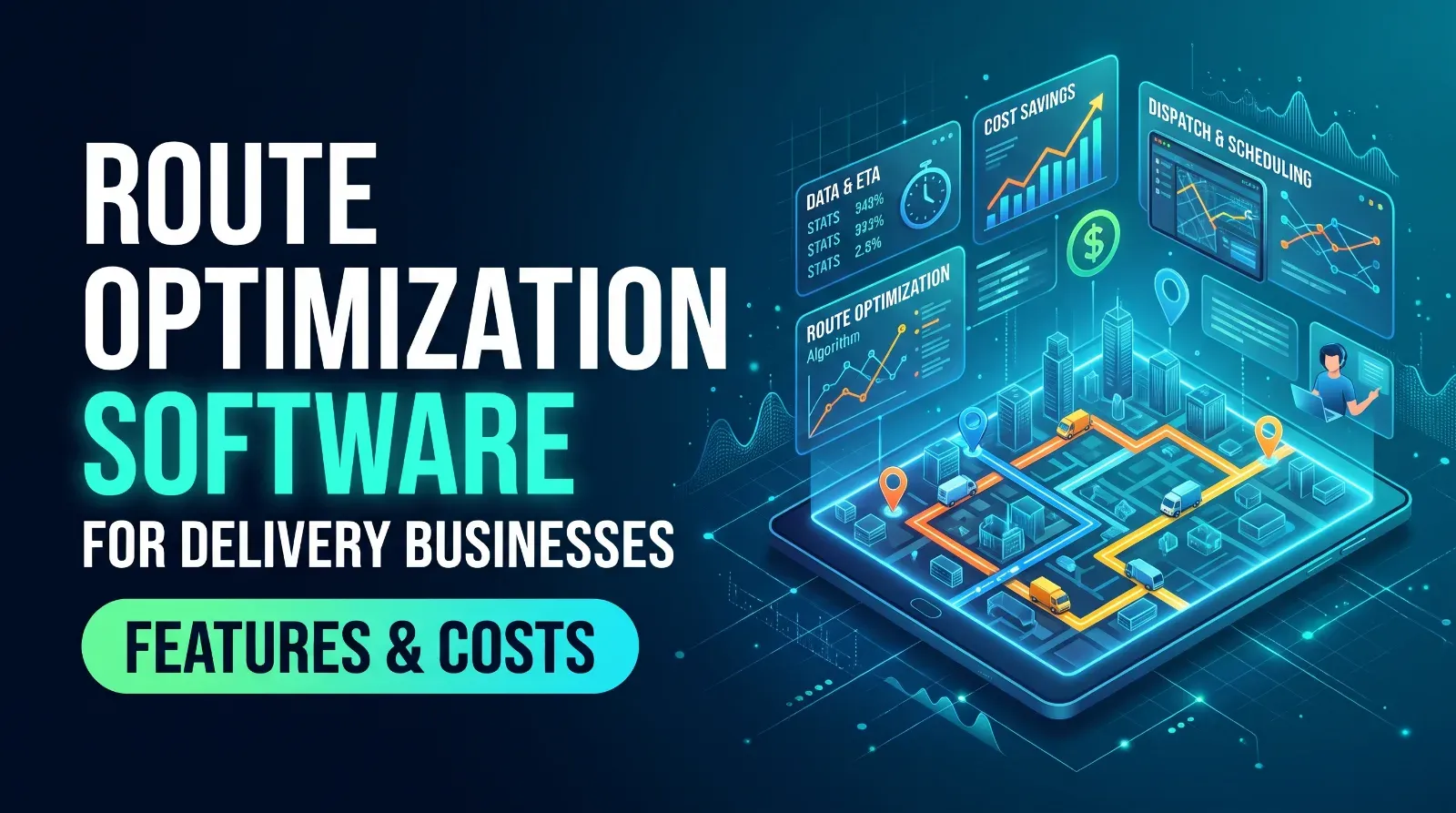
Looking to build this instead of buying it? See our Logistics, Dispatch & Courier Software Development service →
If your drivers plan routes by hand, you are probably losing time and fuel every day. Route optimization software finds better stop sequences and assigns jobs more fairly. For delivery and service businesses, even small improvements add up quickly.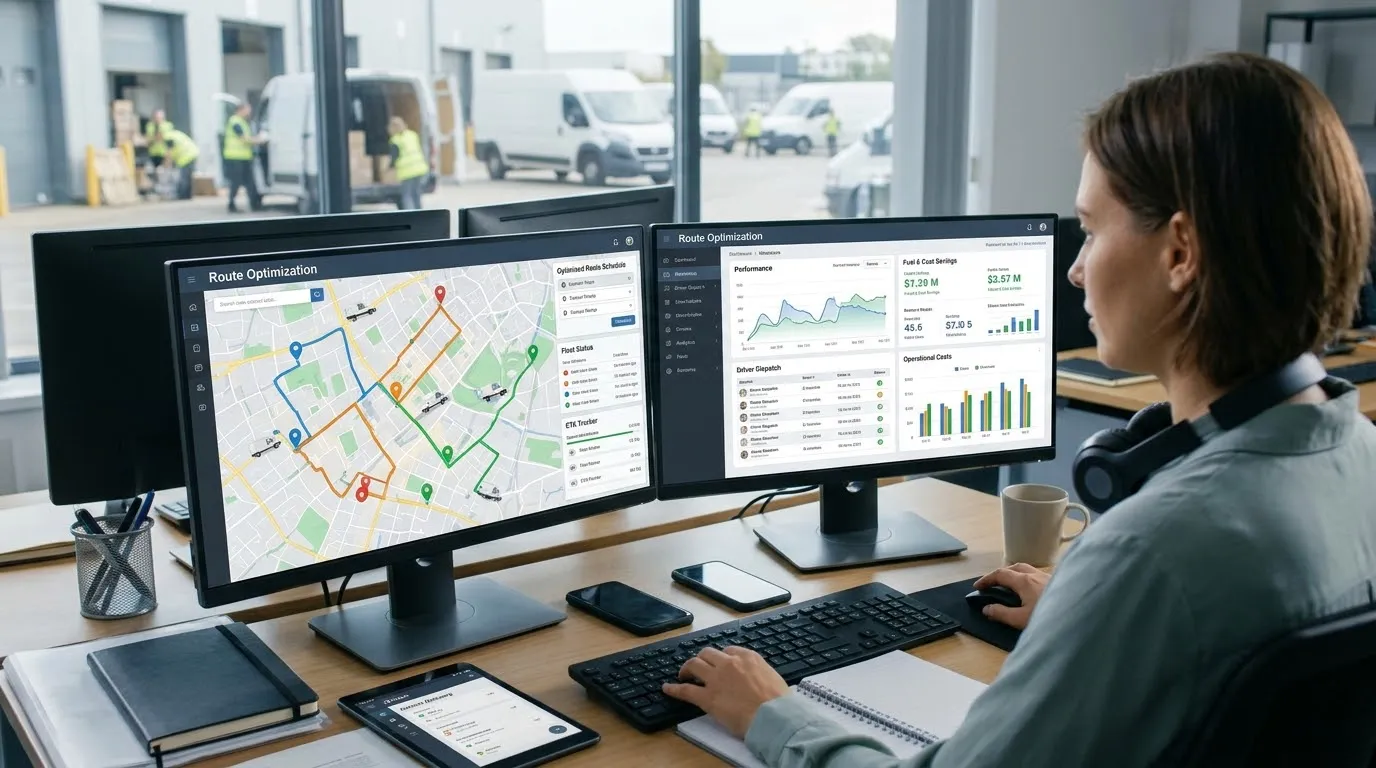
What route optimization does
It takes a set of stops and constraints and produces efficient routes. Typical inputs include addresses, delivery windows, vehicle capacity, driver shifts, traffic patterns and priority customers. The output is a planned route for each driver, with a sequence of stops and expected arrival times.
Features that matter
- Multi-stop planning: build routes for many drivers and stops at once.
- Time windows: respect customer delivery or service appointments.
- Capacity limits: keep loads within vehicle limits.
- Live changes: add urgent jobs or reroute when something goes wrong.
- Driver app: show the route, collect proof of delivery with photos or signatures and update status.
- Customer notifications: send arrival estimates and delivery confirmations.
- Reporting: compare planned and actual routes, delays and cost per stop.
What you gain
- Less time and fuel on the road.
- More deliveries or jobs per driver per day.
- Fewer missed windows and complaints.
- Better visibility for dispatchers and managers.
- Cleaner data for pricing and planning.
Off-the-shelf or custom?
Many ready-made tools handle standard routing well. A custom build becomes attractive when:
- You have special rules, such as restricted vehicles, mixed fleets or customer-specific requirements.
- Routing must connect tightly with your orders, warehouse and invoicing.
- You want a driver app that matches your exact process.
- Subscription fees per vehicle or driver are growing faster than your revenue.
For a wider view of what logistics systems include, read Custom Logistics Software: Features, Cost and When to Build. If you manage vehicles and drivers together, also see Fleet Operations Software and Trucking Company Dispatch Software.
What affects the cost of a custom build
- The complexity of your routing rules.
- Whether you need a mobile driver app, and for which platforms.
- Integrations with maps, orders, warehouse and accounting systems.
- Live tracking and notification features.
- The number of users and the volume of daily stops.
- Reporting and analytics needs.
Start small
You do not need every feature on day one. Many businesses start with route planning and a simple driver app, measure the savings and then add tracking, notifications and analytics. This keeps risk low and proves value early.
Conclusion
Route optimization turns a daily planning headache into a repeatable process. Choose a packaged tool when your needs are standard, and consider a custom build when your rules and integrations are what make your business different. Begin with the routes that cost you the most today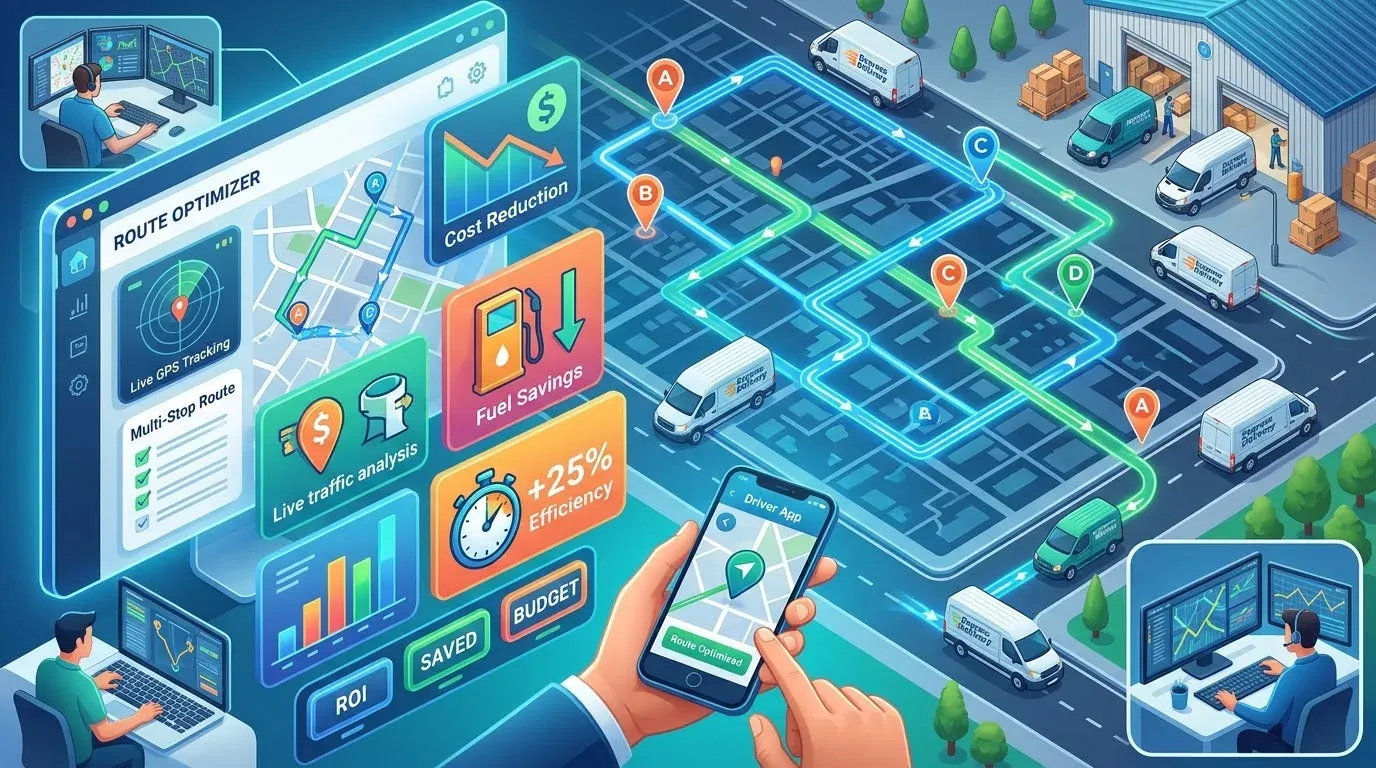 .