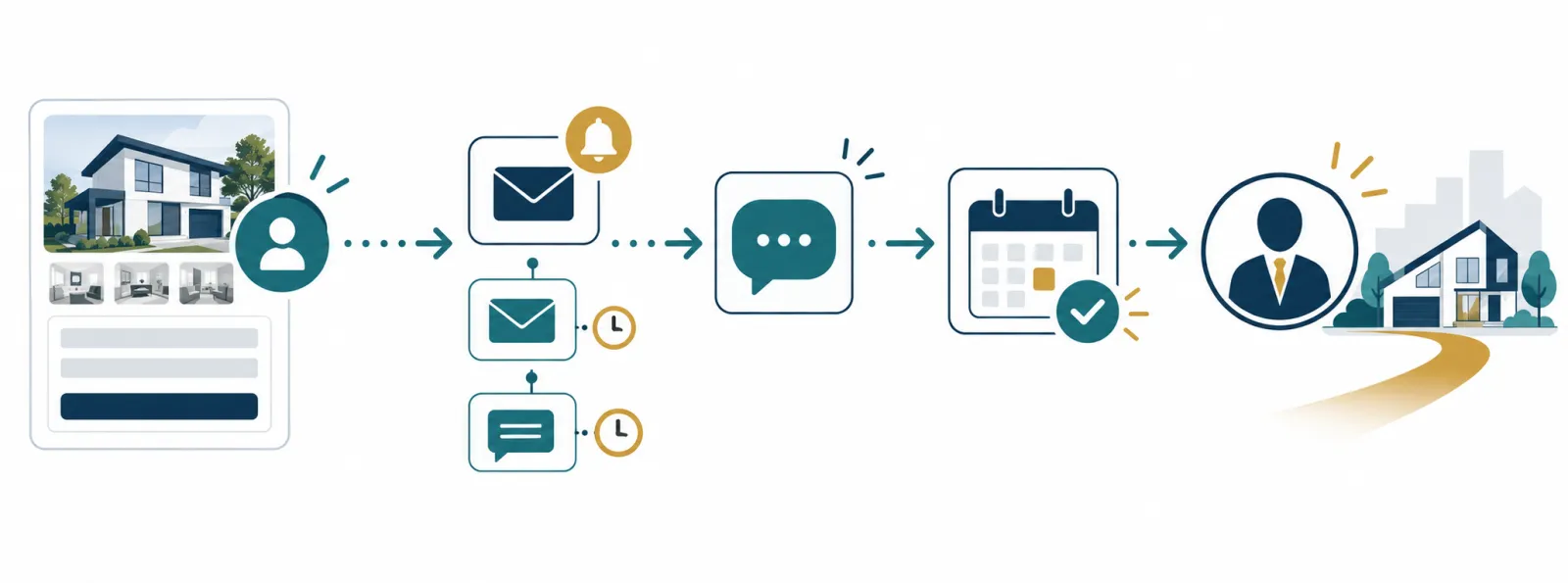
Real Estate CRM Follow-Up Automation: Sequences, Timing and Human Handoffs
Build better real estate follow-up automation with practical sequences, timing rules, CRM triggers, response monitoring and human handoffs.
Zain
September 29, 2026

Looking to build this instead of buying it? See our A Custom Real Estate CRM Built Around Your Exact Workflow service →
A practical follow-up workflow starts with a source-of-truth record. Capture the inquiry source, property or area of interest, preferred contact method, stage, assigned owner and promised next step. When these fields are incomplete, route the record to a review queue rather than placing it in a generic nurture sequence.
Every sequence needs explicit exit rules. A reply, booked meeting, do-not-contact request, contract-stage change or unclear inquiry should stop automation and create a task for a named person. This prevents conflicting messages and gives agents the context needed to continue a conversation naturally.
Before launch, test each path using realistic scenarios: a new website inquiry, a missed call, an unresponsive prospect, a referral, a property-specific request and a lead who asks to stop communication. Review response time, booked appointments, unsubscribe rate, missed-owner alerts and conversion by source every week.
For teams replacing spreadsheets or generic CRM workflows, the right design is usually a tailored CRM that connects lead capture, routing, follow-up tasks, conversations, documents and reporting in one auditable process.# Real Estate CRM Follow-Up Automation: Sequences, Timing and Human Handoffs
A real estate CRM follow-up system should help teams respond consistently without making communication feel robotic. The strongest workflows combine timely reminders, useful context and clear human ownership.
What follow-up automation should handle
A CRM can create tasks after a new inquiry, send approved reminders, notify an owner when a lead replies and identify opportunities with no next action. Automation should reduce forgotten work, not replace judgment.
Build sequences around intent
Use different sequences for website inquiries, referrals, property requests, open-house leads and inactive opportunities. Each sequence should define its trigger, timing, message purpose, stop conditions and owner.
Timing rules that protect the customer experience
- Respond quickly after a new inquiry
- Use longer intervals for low-intent leads
- Stop automated messages after a reply
- Escalate urgent requests to a person
- Respect working hours and communication preferences
Human handoffs
Keep a person involved when the lead asks about pricing, financing, legal matters, complaints, sensitive data or a complex property situation. The CRM should show why a handoff occurred and what the next action is.
Measuring results
Track response time, follow-up completion, reply rate, appointment conversion, unsubscribe rate and conversion by source. Review failures weekly and adjust one rule at a time.
Implementation checklist
Start with one lead source, write the sequence rules, test realistic scenarios, train the team and monitor outcomes for 30 days. Real estate follow-up automation works best when it makes responsibility visible and gives people the right context at the right moment.