AI Lead Routing for Real Estate: Rules, Integrations and ROI
Learn how AI lead routing can assign real estate inquiries faster using transparent rules, CRM integrations, human oversight and measurable ROI.
DevGlim Team
September 29, 2026

Looking to build this instead of buying it? See our A Custom Real Estate CRM Built Around Your Exact Workflow service →
Fast lead response matters, but speed alone does not create a good customer experience. Real estate teams also need accurate assignment, clear ownership and a reliable next action. AI lead routing can support that process when its rules are transparent and easy to override.
What is AI lead routing?
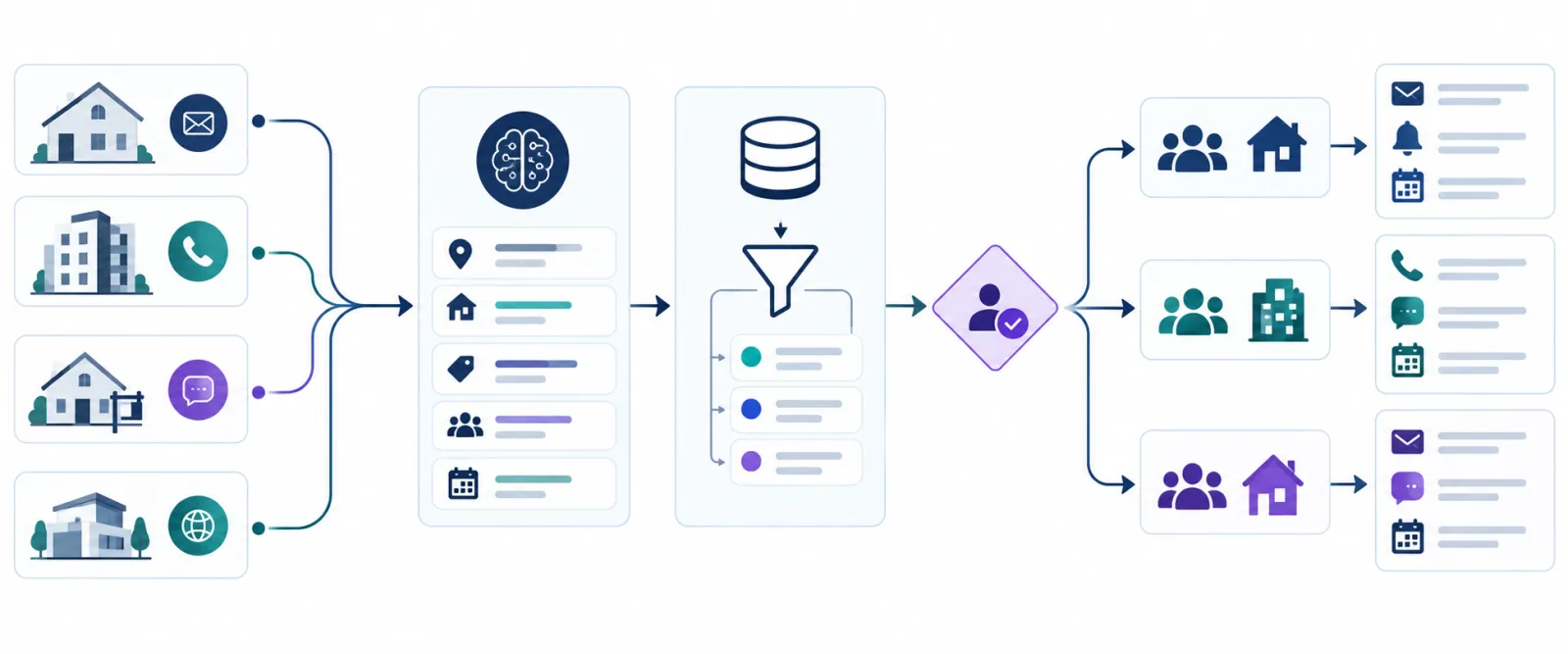
AI lead routing uses structured data and workflow rules to decide where a new inquiry should go. It can consider property type, location, lead source, urgency, language, team availability and existing ownership.
The system should explain why a lead was routed and keep a record of the decision.
Useful routing rules
Territory and property expertise
Assign leads according to geography, property type or market specialization. This helps teams avoid sending complex inquiries to people without the right context.
Availability and workload
Use working hours, current assignments and response-time targets to balance workload. Add fallback rules for holidays, absences and unresponsive owners.
Lead intent and urgency
Prioritize signals such as appointment requests, financing timelines and repeat engagement. Avoid treating every AI score as a final decision.
Source and campaign
Preserve the original source and campaign so managers can compare conversion rates and marketing quality.
Integrations required
A dependable routing workflow may connect:
- Website forms
- CRM records
- Email and SMS
- Calendar availability
- Calling systems
- Advertising platforms
- Reporting dashboards
Start with the systems that contain authoritative data. Conflicting fields between tools are a common cause of bad assignments.
Human oversight and safeguards
Keep a human review path for high-value opportunities, complaints, pricing questions, legal issues and incomplete records. Log every routing decision, make confidence thresholds visible and allow managers to reassign leads manually.
Protect personal data with role-based access, retention rules and secure integration credentials.
How to measure ROI
Track:
- Time to first response
- Assignment accuracy
- Leads without an owner
- Follow-up completion
- Appointment conversion
- Conversion by source
- Revenue per representative
Compare performance before and after launch. An AI routing system is valuable when it improves response and conversion without increasing operational confusion.
Implementation roadmap
Start with one lead source and a small set of rules. Test historical examples, review edge cases with users, launch with monitoring and expand only after the results are reliable.
AI lead routing should make ownership clearer, not hide decisions behind automation. The strongest systems combine structured rules, useful integrations and accountable human judgment.