How to Choose a Medical Website Design Company
A buyer-focused checklist for choosing a medical website design partner without being distracted by vague healthcare claims or a polished portfolio alone.
DevGlim Team
September 21, 2026
Looking to build this instead of buying it? See our Healthcare Website Design & Development Services service →
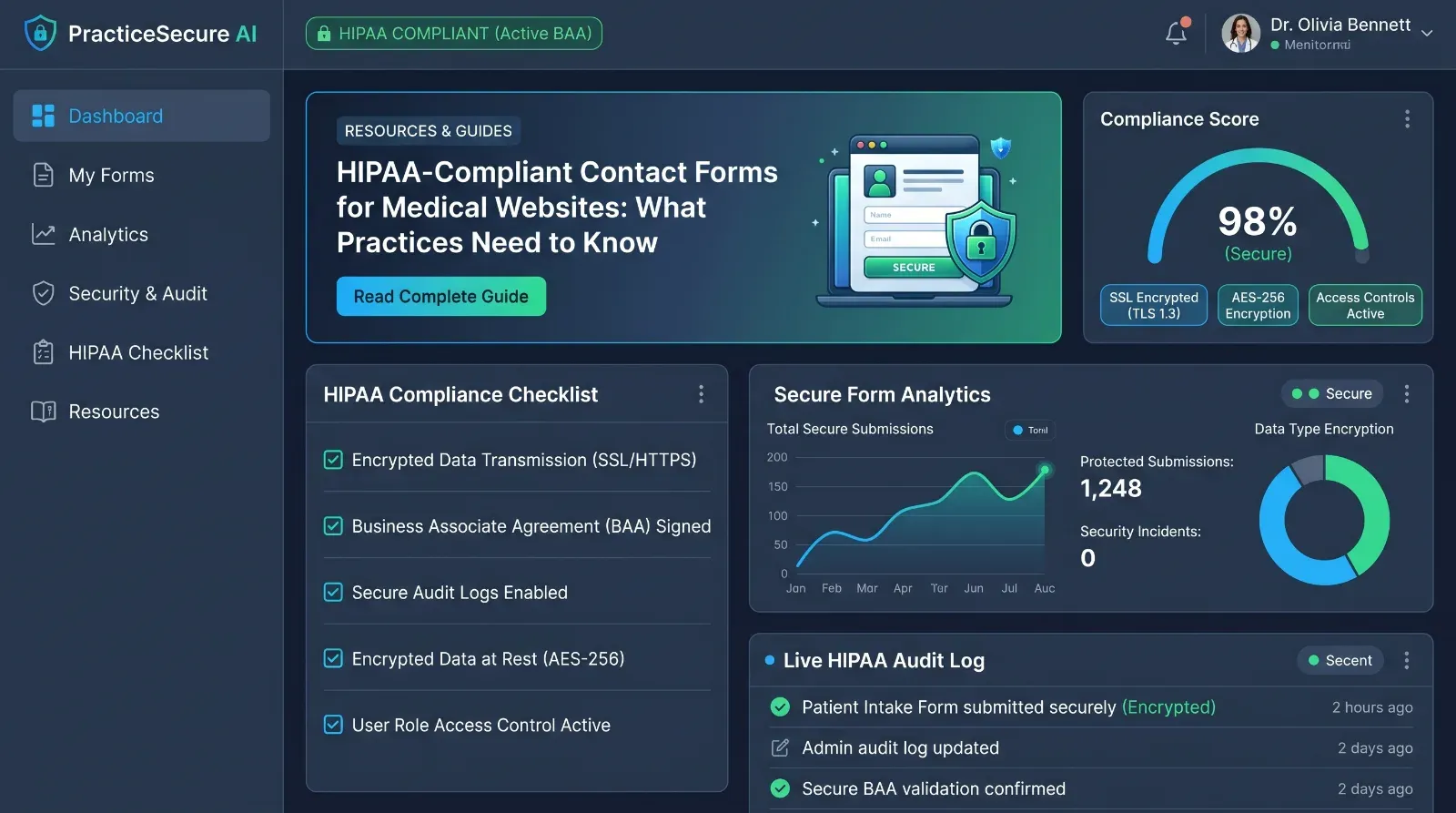
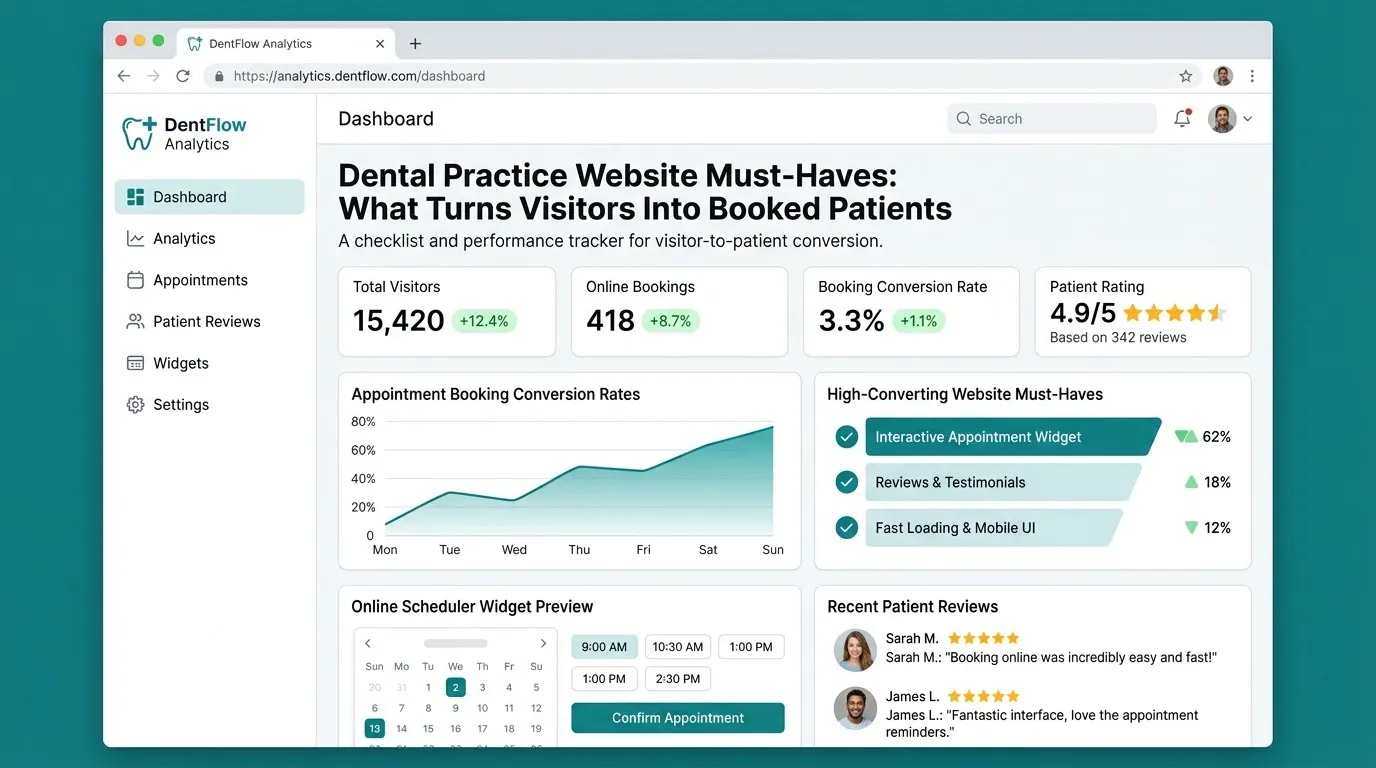
A medical website has to do more than look credible. It must help the right patient find the right service, understand what happens next and complete an action without unnecessary friction. For a clinic, diagnostic provider or medical staffing firm, that action may be booking, calling, submitting a referral or starting an application.
This guide explains how to compare a medical website design company on the work that actually affects outcomes: information architecture, accessibility, integrations, privacy boundaries and measurement.
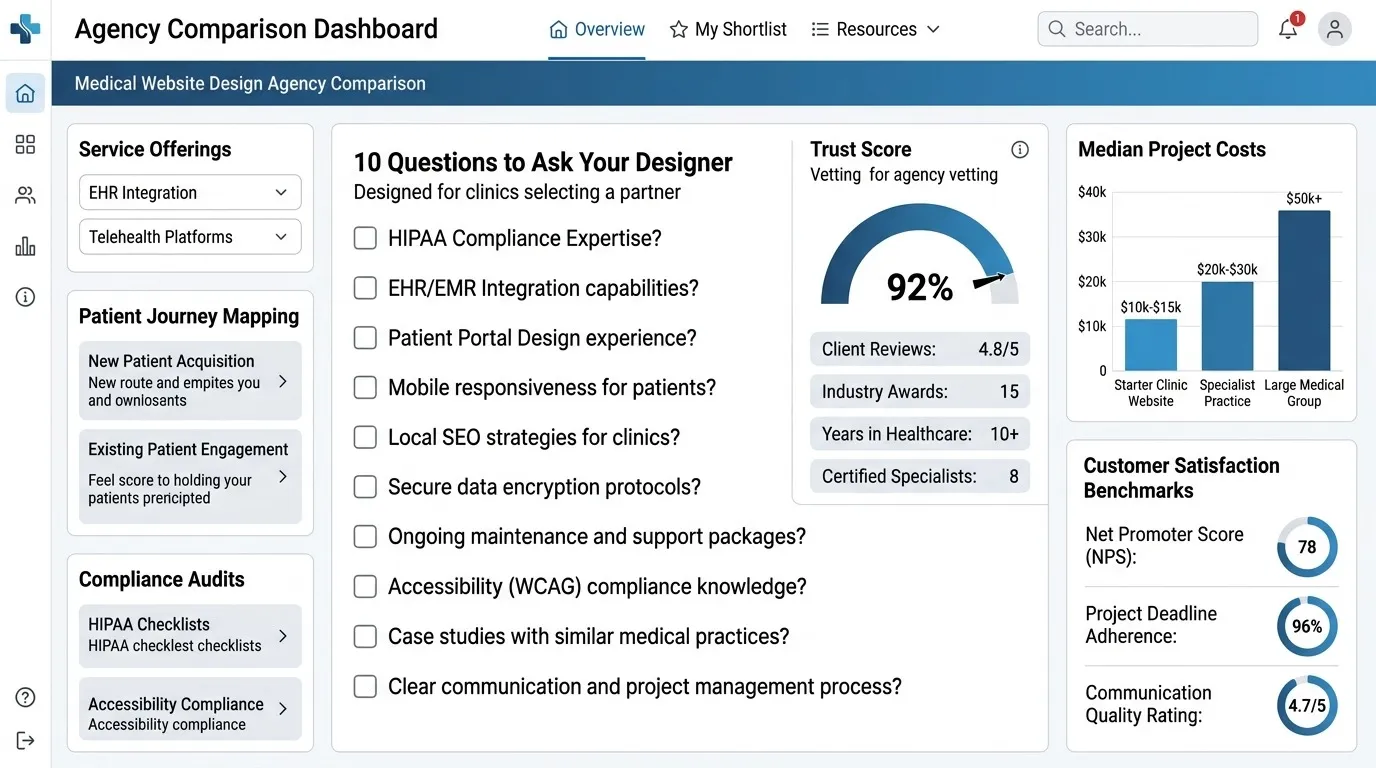
 A healthcare website journey should connect service discovery, provider choice and appointment booking without unnecessary friction.
Start with the patient or buyer journey
Before reviewing visual concepts, ask the agency to map your main user journeys. A useful map names the audience, the question they arrive with, the proof they need and the action they should take. A multi-location clinic may need location, insurance and appointment paths. A diagnostics company may need separate patient, clinician and partner journeys. A staffing firm needs both employer and candidate paths.
If every visitor is pushed through the same generic homepage funnel, the website will usually create avoidable confusion.
Planning a healthcare website? Estimate the likely investment, timeline and complexity based on your audiences, locations, content and integrations. Open the full-page tool.
Free tool · about 3 minutes
Healthcare Website Cost Calculator
You will get:
- An indicative project investment and timeline
- A complexity level based on your scope
- The capabilities and decisions most likely to drive the project
No sign-up needed to see your result. This is an indicative estimate based on the information provided. Final pricing depends on features, integrations, design complexity and project requirements.
Evaluate healthcare experience by evidence, not labels
“Healthcare experience” should mean more than adding medical imagery. Ask for examples that show complex service navigation, accessible forms, location discovery, referral flows or integration with an approved scheduling system. Ask what the team learned and what changed after launch.
DevGlim’s healthcare website design and development service separates marketing-site scope from portals and systems that handle protected or clinical data. That boundary should be explicit in any proposal.
Ask how accessibility is built into the process
Accessibility is not a plugin installed at launch. The partner should account for keyboard navigation, visible focus states, semantic headings, form labels and errors, readable contrast, alternative text and sensible zoom behavior during design and development. It should also test important flows on mobile and with assistive technology.
For deeper implementation guidance, read our guide to building accessible web applications.
Clarify privacy and integration boundaries
A public healthcare marketing website is not automatically a compliant clinical system. If forms, analytics, chat, scheduling or portals may handle sensitive data, identify the data path and the approved vendors before development. Ask who is responsible for hosting, access control, auditability, retention and legal review.
A credible agency will not promise blanket compliance from a brochure site. It will document assumptions and involve your privacy or compliance owner where required.
Review content, SEO and conversion as one system
The best structure should serve users and search engines at the same time: one clear page for each distinct intent, descriptive titles and headings, useful internal links, evidence-rich copy and calls to action that match the visitor’s stage. Avoid a proposal built around dozens of near-duplicate keyword or city pages.
Request a content inventory and redirect plan before redesigning an indexed site. Existing URLs, titles, canonicals and useful copy should be preserved unless there is a documented reason to change them.
Compare proposals using the same checklist
- Discovery: Are audiences, journeys, locations, services and conversion events defined?
- Content: Who interviews subject-matter experts, writes copy and verifies claims?
- Accessibility: Which standards and tests are included?
- Integrations: Are scheduling, CRM, analytics and form data flows specified?
- SEO migration: Are URL preservation, redirects, canonicals and sitemap checks included?
- Measurement: Which events and outcomes will be tracked after launch?
- Ownership: Who owns the code, content, accounts and design files?
Estimate scope before requesting proposals
Use the healthcare website cost calculator to identify the features and integrations that most influence scope. The result is a planning estimate, not a substitute for discovery, but it gives your team a consistent brief for agency conversations.
When you are ready, book a strategy call with DevGlim. We will review the current site, the highest-value journeys and the technical boundaries before recommending a build.