How to Build a Digital Twin for a Manufacturing Line: A Step-by-Step Implementation Guide
The practical steps behind a manufacturing digital twin project, in the order they actually need to happen — and where most first attempts go wrong.
DevGlim Team
September 17, 2026
Looking to build this instead of buying it? See our Industry Management Systems service →
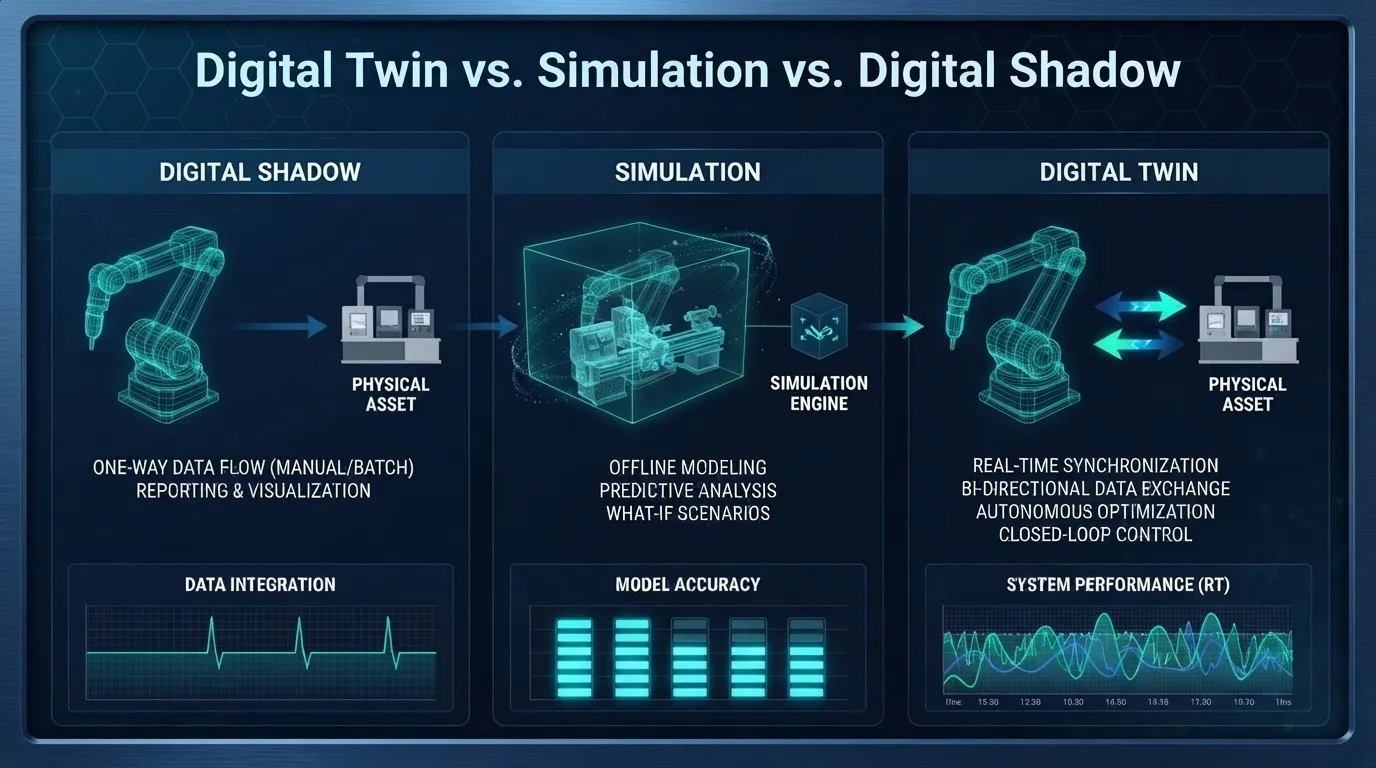
This guide assumes you already know what a digital twin is and have decided it's worth building — if you're still deciding between a full twin and a simpler digital shadow, start there instead. Most digital twin projects that stall don't fail because the modeling technology wasn't good enough — they fail because the steps were done out of order, usually by buying a dashboard before solving the data problem underneath it. Here's the sequence that actually works.
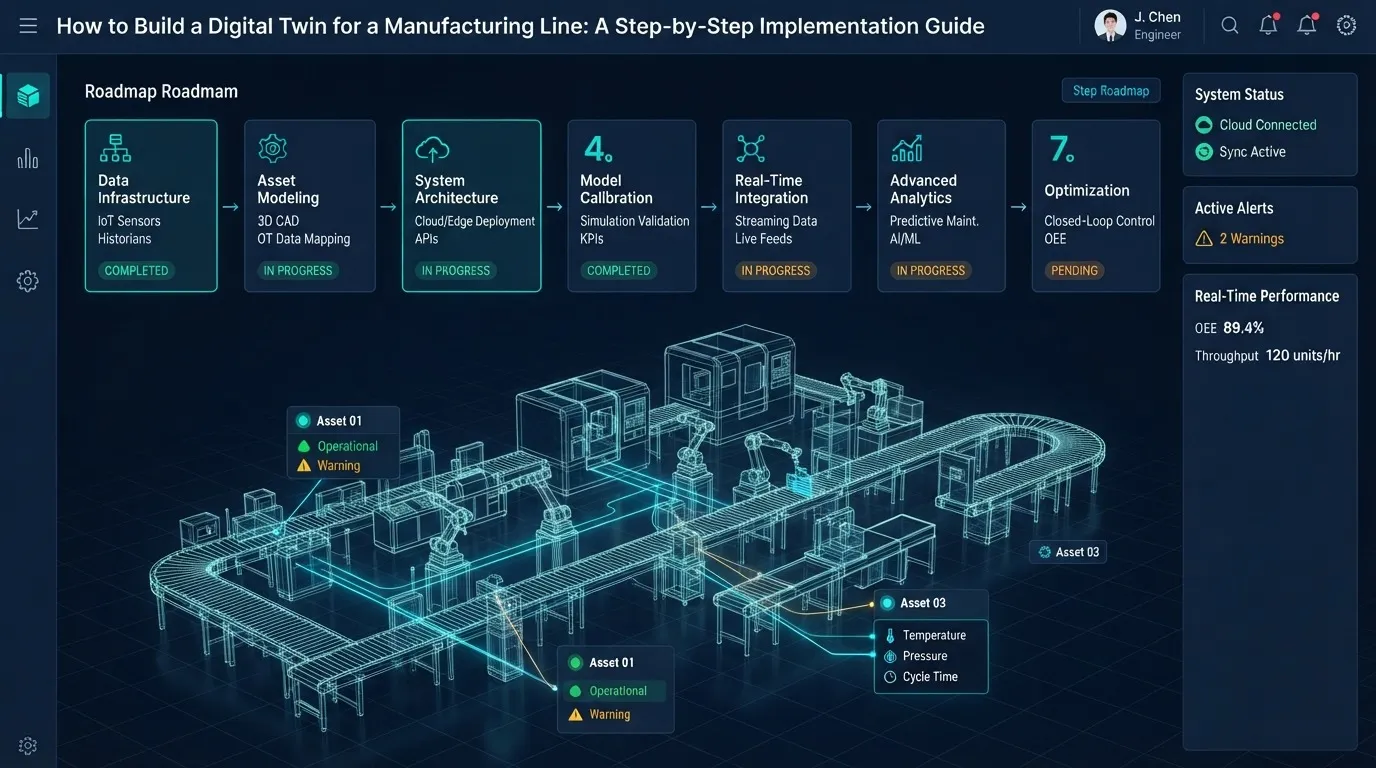
Step 1: Pick One Asset, Not the Whole Plant
The most common first mistake is scoping a "plant-wide digital twin" as a first project. Start with a single piece of equipment or one production line — ideally one that's expensive to fail, has a clear and measurable current pain point (unplanned downtime, quality variance), and is already at least partially instrumented. A narrow, successful first project builds the case and the internal expertise for expanding scope later.
Step 2: Audit What Data You Already Have
Before adding sensors, find out what's already available from existing PLCs, SCADA systems, or equipment-native telemetry. Many manufacturers are sitting on more usable data than they realize, just not centralized or in a usable format. This audit determines whether the real first project is data integration, not new hardware.
Step 3: Close the Instrumentation Gaps
Add sensors only for what the audit shows is missing and actually needed for your chosen use case — vibration and temperature sensors for predictive maintenance, for example. Resist the urge to instrument everything "in case it's useful later"; each sensor adds a maintenance and data-quality burden of its own.
Step 4: Build the Data Pipeline
This is the layer most projects underinvest in. You need a reliable path from sensors (via an IoT gateway or existing industrial protocol like OPC-UA or Modbus) into a time-series database, usually via a message broker like MQTT or Kafka to handle the streaming volume without dropping data during network hiccups. Build in data validation here — a model trained on bad sensor data will make confidently wrong predictions.
Step 5: Choose the Right Model Type
Not every digital twin needs machine learning. A physics-based model (using known engineering relationships) is often more accurate and requires far less historical data than a trained ML model, and it's the right choice when the underlying physics are well understood. Statistical or ML models earn their complexity when the failure modes are too complex to model analytically and you have enough historical data (including failure examples) to train on.
Step 6: Validate Against Reality Before Trusting It
Run the model in parallel with normal operations for a defined period, comparing its predictions against what actually happens, before using it to drive any real decisions or maintenance actions. Skipping this step is how a plant ends up with an expensive dashboard nobody trusts enough to act on.
Step 7: Start With Alerts, Not Automation
Even for a true bidirectional twin, the safest rollout puts a human in the loop first: the twin recommends an action (a maintenance window, a setpoint change) and an operator approves it, rather than the system acting automatically from day one. Move to more automated control only once the model's track record justifies the trust.
Common Failure Points
- Buying the visualization layer before the data pipeline is solid — a beautiful dashboard fed by unreliable data is worse than no dashboard.
- Scoping too broad too soon, so nothing ships and momentum dies before any value is proven.
- No validation period before decisions are made off the model's output.
- Treating it as a one-time project instead of a system that needs the model retrained and revalidated as equipment ages and conditions change.
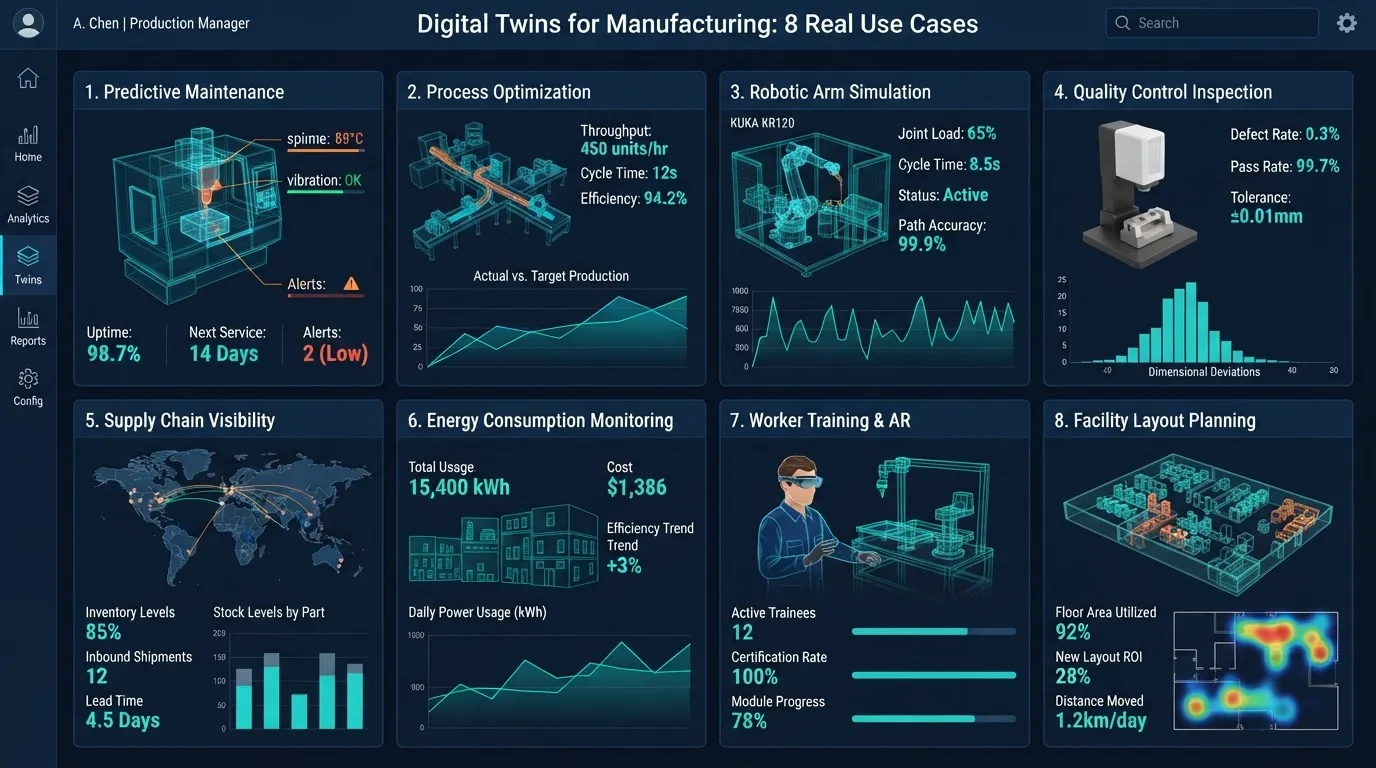
If you're evaluating whether to build this in-house or bring in a development partner, the deciding factor is usually less about the modeling and more about whether you have the industrial-data-integration expertise (OT/IT convergence) in-house — that layer trips up more projects than the analytics does. See eight real digital twin use cases to sanity-check that your chosen use case justifies this level of investment before committing.