Digital Twins for Manufacturing: 8 Real Use Cases
Eight concrete ways manufacturers actually use digital twins today, from predictive maintenance to energy optimization — not the vendor-deck version.
DevGlim Team
September 17, 2026
Looking to build this instead of buying it? See our Industry Management Systems service →
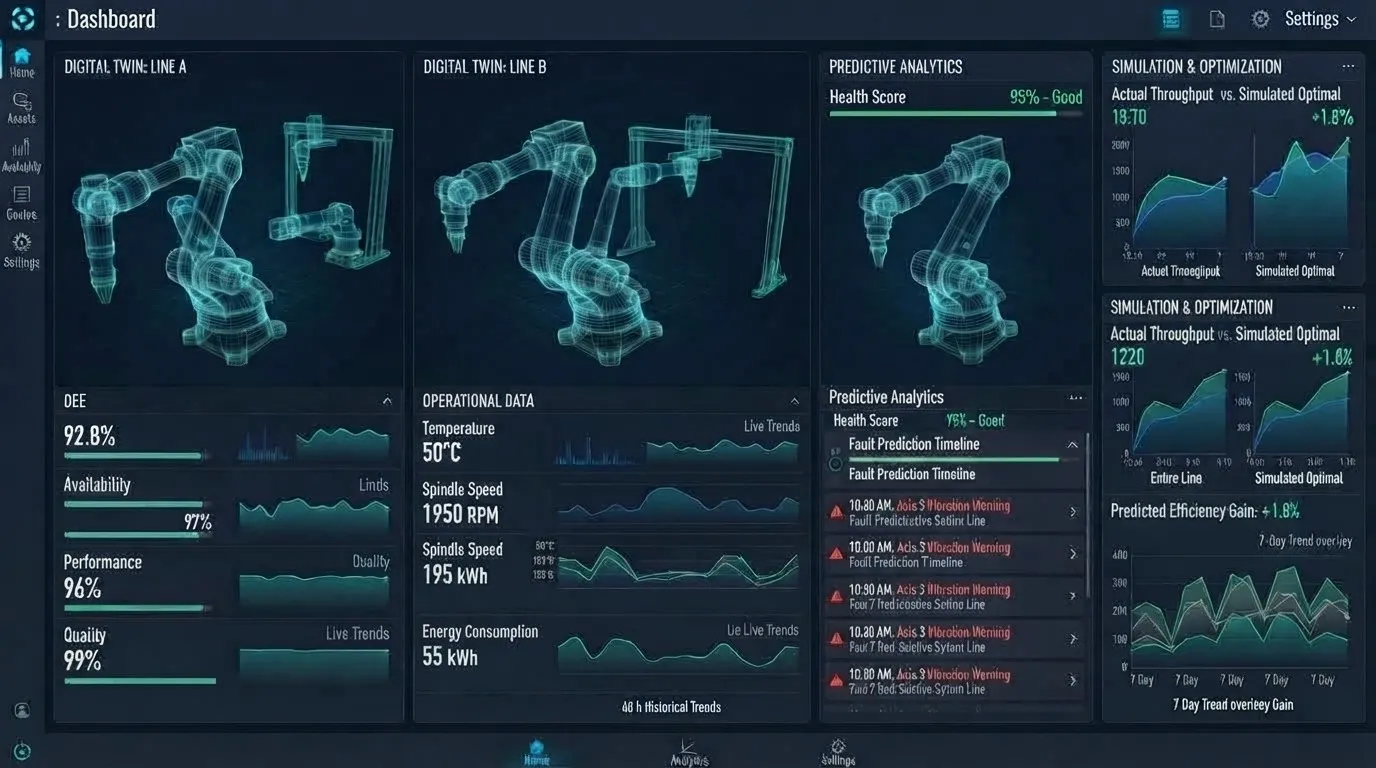
Once you're past what a digital twin actually is, the more useful question is what it does day to day. Here are eight applications manufacturers are actually running, not the abstracted version from a vendor slide deck.
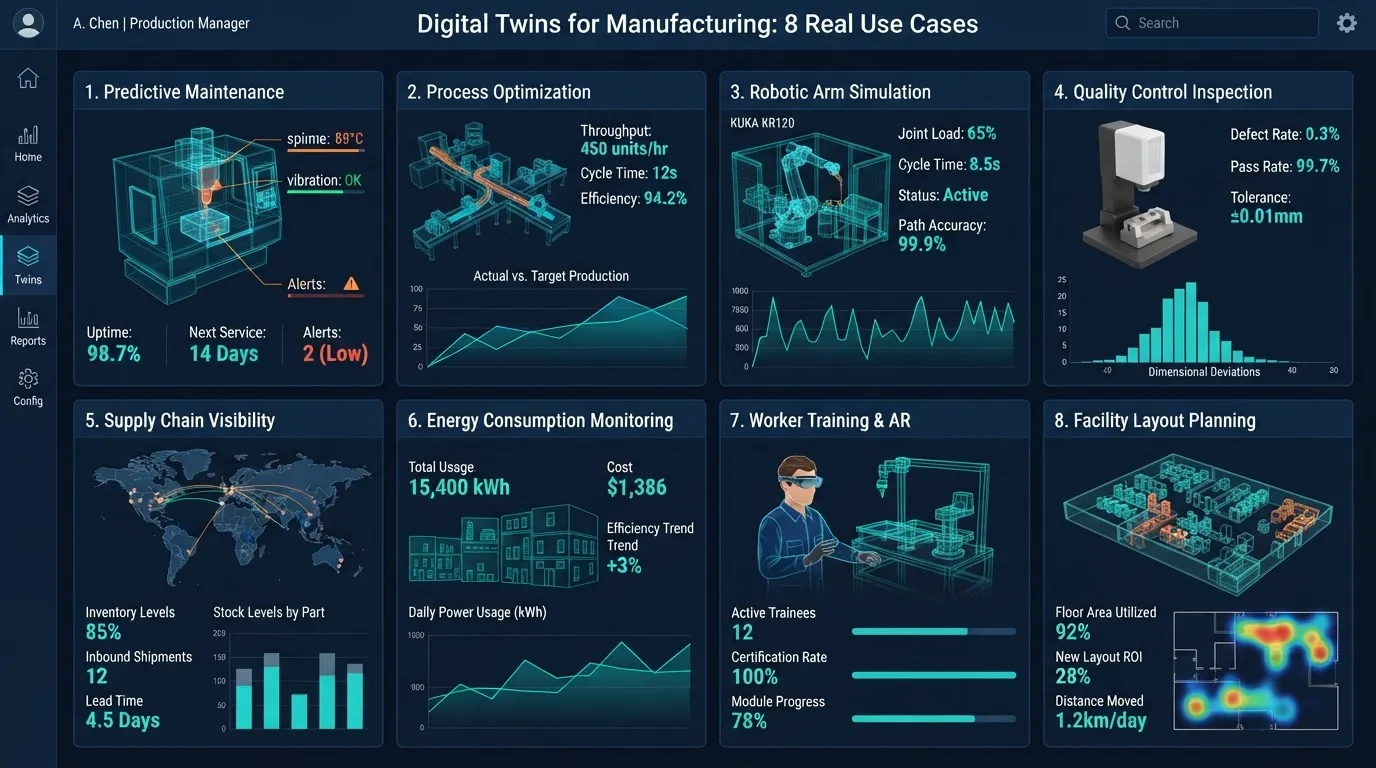
1. Predictive Maintenance
The most common and highest-ROI use case. Vibration, temperature, and current sensors feed a model trained on the equipment's normal operating signature; deviations trigger a maintenance alert before a bearing or motor actually fails. This replaces both reactive maintenance (fix it when it breaks, with unplanned downtime) and calendar-based preventive maintenance (replace it every 6 months whether it needs it or not, wasting parts and labor).
2. Production Line Simulation
Before committing to a new schedule, product mix, or layout change on the physical line, planners run it against the twin first. This catches bottleneck shifts and buffer-capacity problems that don't show up in a static capacity spreadsheet, because the twin accounts for the actual variability in cycle times and changeover durations.
3. Quality Drift Detection
Process parameters (temperature, pressure, speed) that correlate with good output are learned by the model, and it flags when the live process starts drifting away from that envelope — before the drift shows up as a defect in final inspection. This shifts quality control from a downstream catch to an upstream prevention.
4. Energy Optimization
Twins of energy-intensive equipment (compressors, furnaces, HVAC in a plant) model the relationship between operating parameters and energy draw, letting operators find the lowest-energy operating point that still meets output targets — often a meaningful cost saving on equipment that runs 24/7.
5. New Product Introduction (NPI) Testing
Before tooling up for a new SKU, manufacturers simulate it running through the existing line's twin to catch fit and throughput problems while changes are still cheap — on the model, not on the physical tooling.
6. Operator Training
A twin that responds realistically to inputs doubles as a training environment, letting new operators practice on the simulated line without risking the physical equipment or losing real production time.
7. Remote Diagnostics
For equipment manufacturers (not just the plants using the equipment), a twin of a customer's specific machine — built from that machine's actual sensor history — lets field engineers diagnose a problem remotely before dispatching a technician, or confirm what part to bring.
8. Digital Commissioning
For new lines, the twin is built and tested against the control logic before the physical equipment is even installed, catching integration issues in software instead of during an expensive on-site commissioning window.
Not every plant needs all eight. Most start with predictive maintenance on their highest-value or most failure-prone equipment, since it has the clearest, fastest-to-measure ROI, then expand into line simulation and quality drift detection once the data pipeline built for maintenance is already in place.
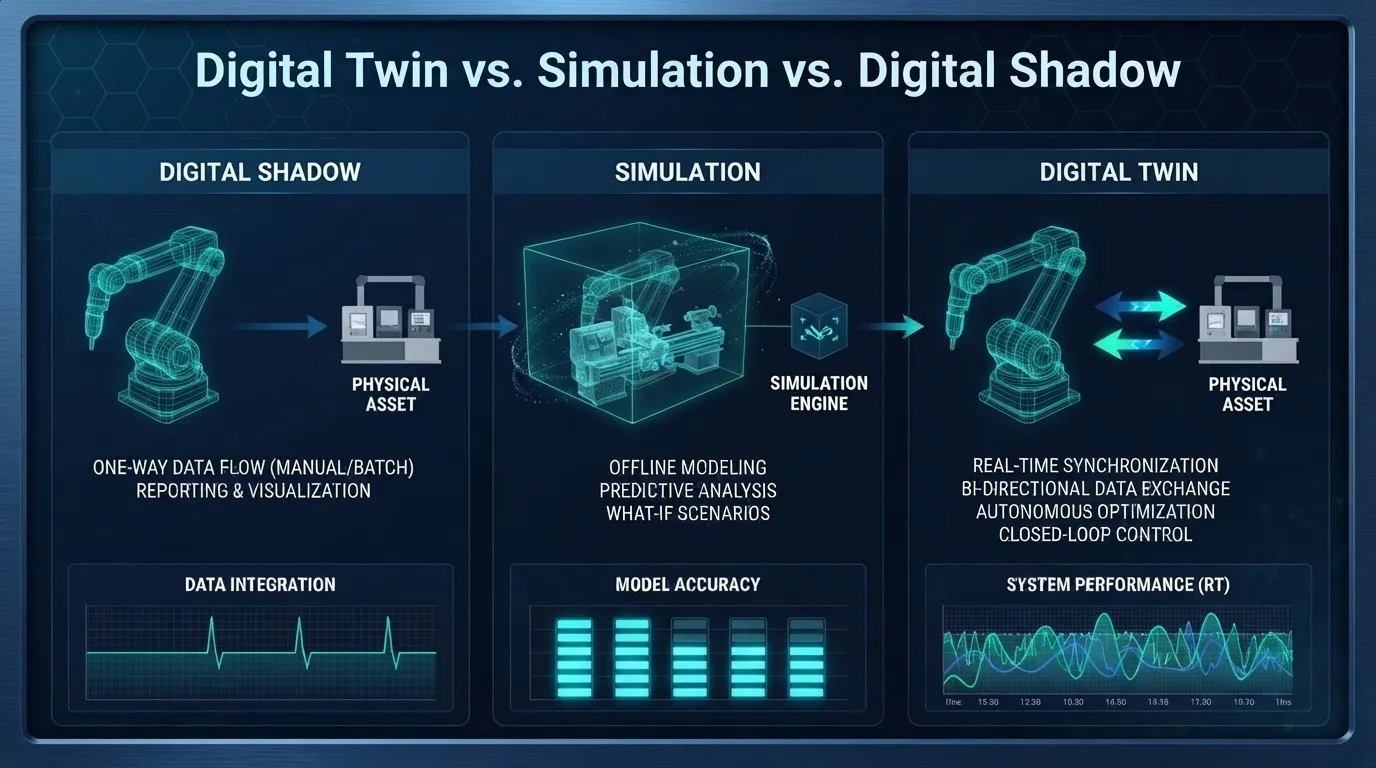
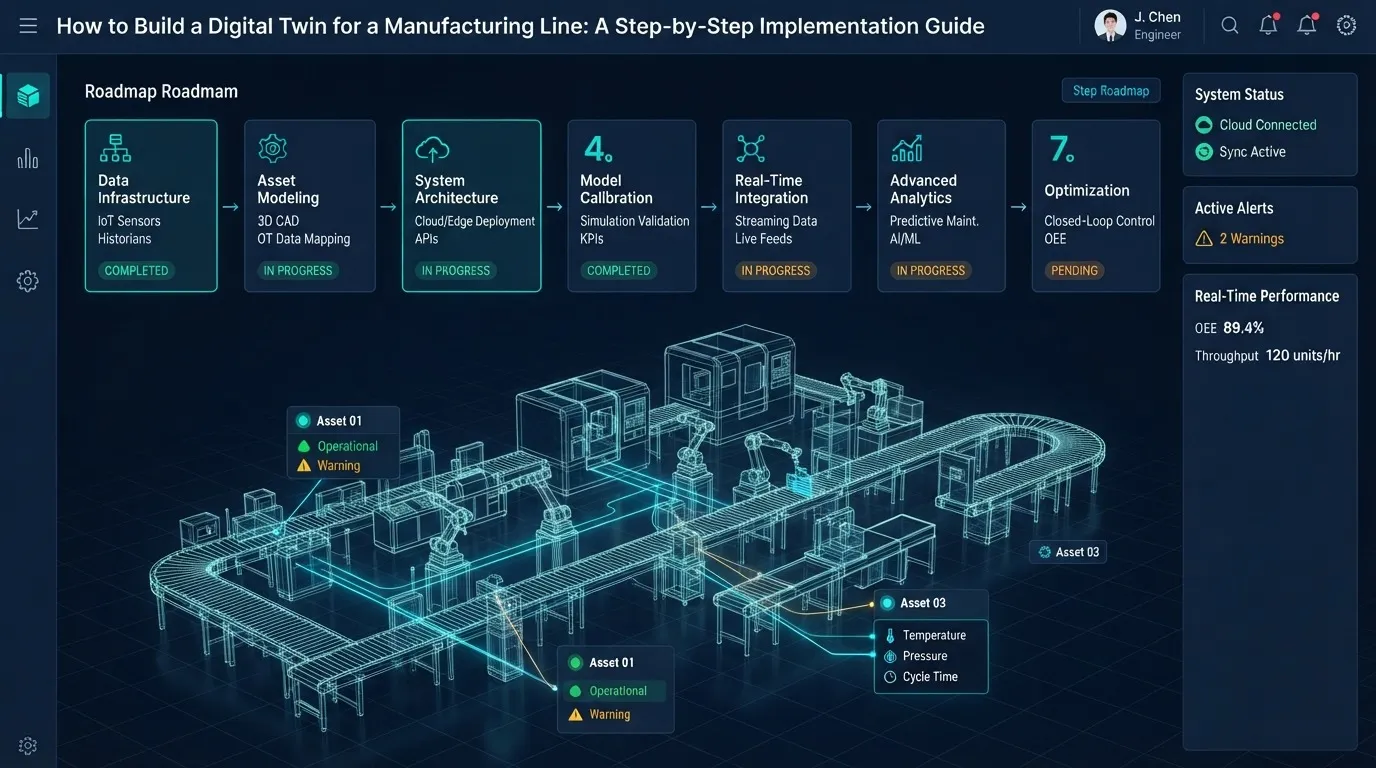
If you're still working out what a digital twin actually is versus a plain simulation, start there. If you're ready to scope a project, how to build a digital twin for a manufacturing line covers the implementation steps in order, and our production scheduling software guide covers a closely related use case — fixing planning and dispatch bottlenecks — for plants not ready for a full twin yet.