Digital Twin vs. Simulation vs. Digital Shadow: Clearing Up the Confusion
These three terms get used interchangeably in manufacturing tech conversations, and the mix-up leads to mismatched expectations on real projects.
DevGlim Team
September 17, 2026
Looking to build this instead of buying it? See our Industry Management Systems service →
Ask five people in a manufacturing tech meeting what a "digital twin" is and you'll often get three different answers overlapping with "simulation" and "digital shadow." The confusion isn't just semantic — it leads to mismatched expectations when a plant thinks it's buying a digital twin and gets a simulation, or budgets for a shadow and expects twin-level control. If you haven't read what a digital twin actually is yet, that's the better starting point; this article assumes you have and digs into the distinction that trips most buyers up.
Simulation: No Live Connection
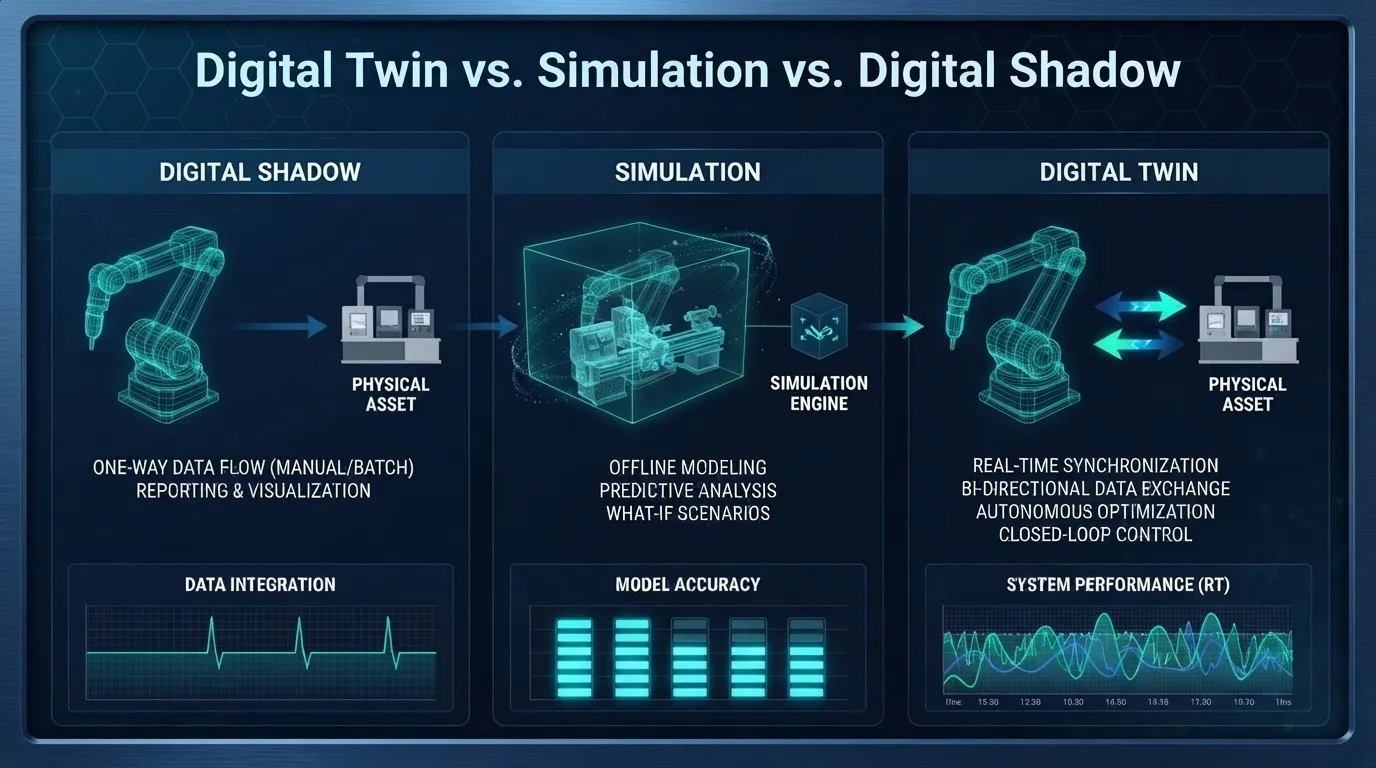
A simulation is a model that runs on hypothetical, historical, or manually entered data — it has no live connection to a physical asset at all. Simulations are genuinely useful for planning and design (testing a layout before you build it, modeling a process that doesn't exist yet), but the model's state doesn't reflect what's happening on the floor right now, because there's no floor yet, or no live feed from it.
Digital Shadow: Live Data, One Direction
A digital shadow receives a continuous, live data feed from the physical asset, so the model's state does reflect current reality. The key limitation: the connection is one-directional. Data flows from the physical asset to the model, but changes made in the model don't flow back to affect the physical process. You can watch and analyze in near-real-time, but you can't act on the twin to change the real equipment's behavior.
This is what most manufacturers running "digital twin" projects actually have today, and it's a legitimate, lower-cost starting point — most of the value in predictive maintenance and quality-drift detection comes from the monitoring and analysis, not from automated bidirectional control.
Digital Twin: The Loop Closes
A true digital twin adds the second direction: changes simulated or decided in the model can be pushed back to adjust the physical asset's behavior — a revised setpoint, an updated maintenance schedule, an automated shutdown trigger. This requires not just a live data feed but a control interface into the physical equipment, plus enough trust in the model's accuracy to let it (or an operator acting on it) make real changes.
Why the Distinction Matters When You're Buying
Vendors sell all three under the "digital twin" label, and it's a fair question to ask directly: does data flow one way or two? A one-way shadow is cheaper, lower-risk, and sufficient for most monitoring and prediction use cases. A true bidirectional twin costs more, takes longer to build trust in, and is worth it specifically when the value is in automated or semi-automated control response, not just visibility.
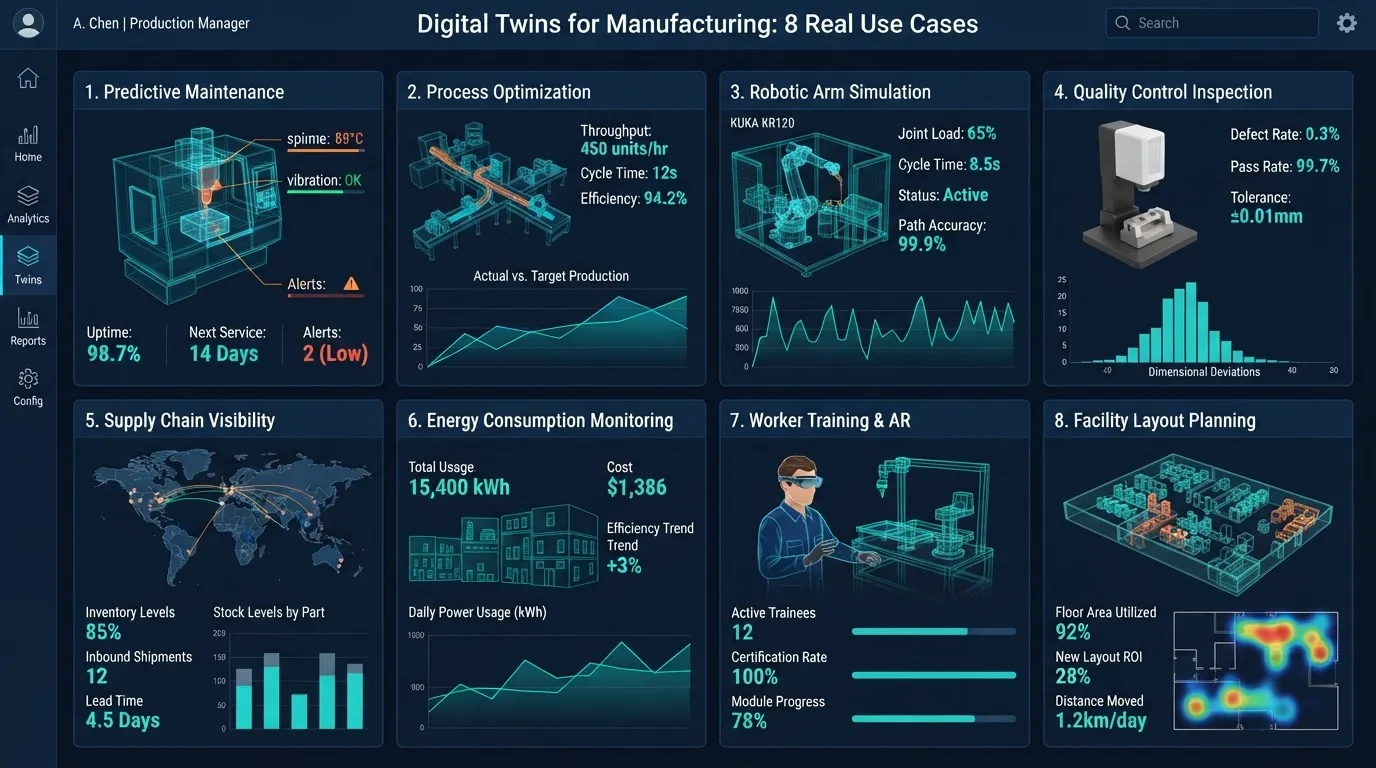
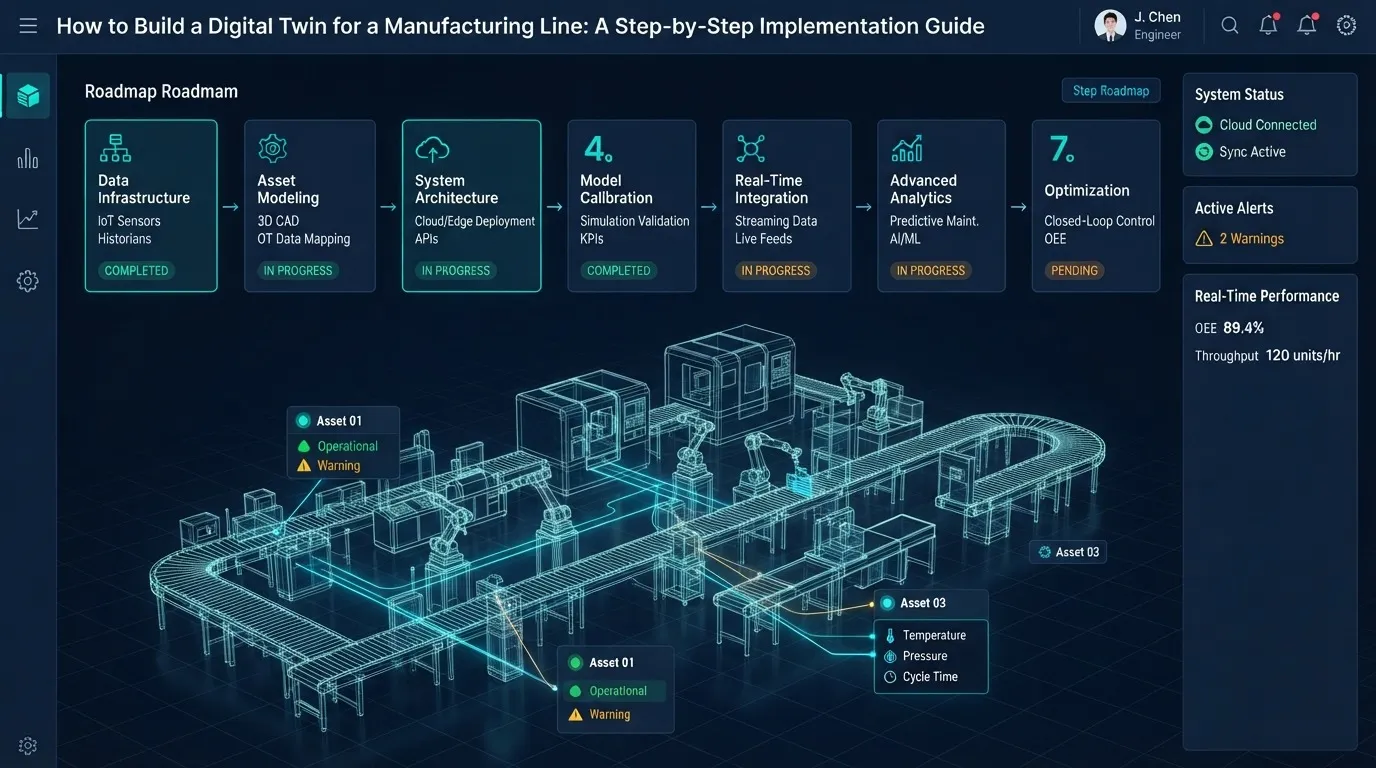
For a deeper look at what building either one actually involves, see how to build a digital twin for a manufacturing line, or eight real use cases to see which level of connection each one actually needs.