How Much Does It Cost to Build a SaaS MVP in 2026?
A SaaS MVP has no single price. Here is what actually drives the budget, which features you can safely postpone and how to get a reliable estimate.
DevGlim Team
October 25, 2026
Looking to build this instead of buying it? See our SaaS Development service →
Founders often ask for "a ballpark" before they have decided what the first version must do. That is understandable, but the cost of a SaaS minimum viable product depends far more on scope decisions than on hourly rates. This guide explains the cost drivers, the features that are easy to underestimate, and how to keep the first release small without making it fragile.
What a SaaS MVP actually needs
An MVP is the smallest product that lets real customers get value and lets you learn whether they will pay. For most B2B SaaS products, that means:
- Sign-up, login and password reset
- Accounts or workspaces, so each customer's data is separated (multi-tenancy)
- The one core workflow that solves the customer's problem
- Basic roles, such as owner and member
- Subscription billing, or a manual invoicing process for early customers
- Transactional email
- Error monitoring, backups and a simple admin view for your team
Everything else, including advanced reporting, a mobile app, a public API, single sign-on and complex permission systems, can usually wait until customers ask for it.
The main cost drivers
1. The core workflow
A form-and-dashboard product is far simpler than one with real-time collaboration, complex calculations, file processing or AI features. Most of the budget sits here, so define it precisely.
2. Multi-tenancy and data separation
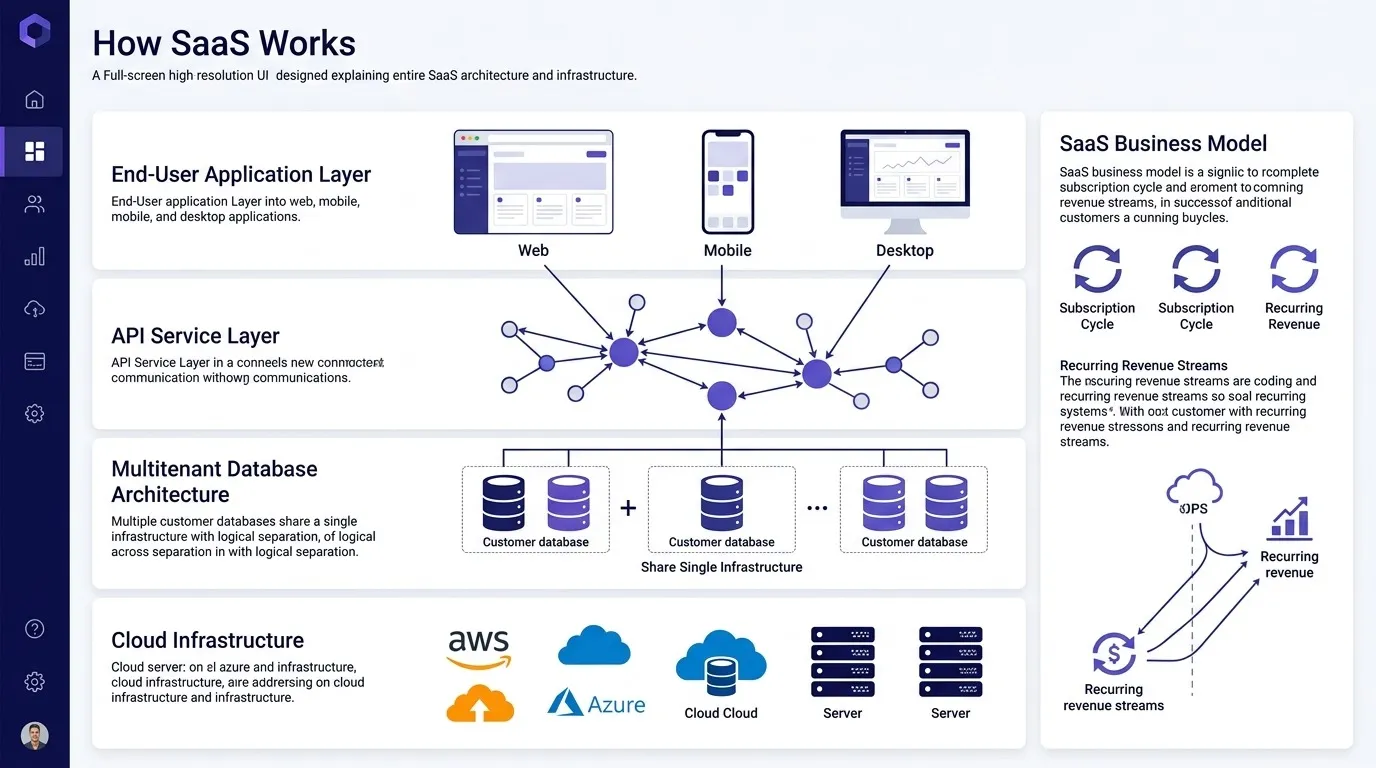
Every query has to respect which customer the data belongs to. Getting this right from day one is much cheaper than retrofitting it. Our guide to how SaaS architecture works explains the common approaches.
3. Billing
Using a payment provider's hosted checkout and customer portal is quick. Usage-based pricing, trials with conversions, coupons, tax handling and invoices for enterprise customers add work.
4. Integrations
Each third-party connection, such as a CRM, accounting tool, calendar or data provider, needs authentication, mapping, error handling and testing.
5. Design
A clean interface built on a component library is affordable. A fully custom brand design system costs more and is rarely what decides whether an MVP succeeds.
6. Team model
A freelancer, an agency and an in-house hire have very different cost profiles. Agencies cost more per hour than a single freelancer but bring design, QA and project management. Compare total delivered cost and risk, not hourly rate alone.
Costs founders often forget
- Hosting and third-party services: servers, database, email sending, error tracking and file storage.
- Security basics: rate limiting, secure password storage, dependency updates and access logging.
- Legal pages and data processing terms, especially if you sell to businesses in regulated markets.
- Maintenance after launch: bug fixes, updates and small improvements. Budget for this from the start.
How to reduce MVP cost without cutting corners
- Write down the single job the product does. If a feature does not support that job, move it to "later".
- Use proven building blocks for authentication, payments and email instead of building them.
- Do things manually at first. Onboarding, reporting and even some billing can be handled by your team for the first customers.
- Keep the architecture simple. A well-structured single application is cheaper to build and run than microservices at this stage.
- Do not skip tests on the core workflow and tenant separation. Those are the bugs that lose customers.
How to get a reliable estimate
Bring a short brief: who the customer is, the core workflow step by step, must-have integrations, how you plan to charge, and any compliance needs. A good development partner will turn that into a scoped feature list, a phased plan and a range, and will tell you which items carry the most uncertainty. Be wary of a fixed number quoted before anyone has asked those questions.
Our startup guide to custom software covers choosing a partner as a non-technical founder. When you are ready, DevGlim's SaaS development team can scope your MVP and give you a phased estimate.