Custom Healthcare Software Solutions: What Clinics and Practices Actually Need
What custom healthcare software solutions actually need to include — compliance, patient data, scheduling — and how they differ from generic practice management tools.
DevGlim Team
September 7, 2026
Looking to build this instead of buying it? See our Industry Management Systems service →
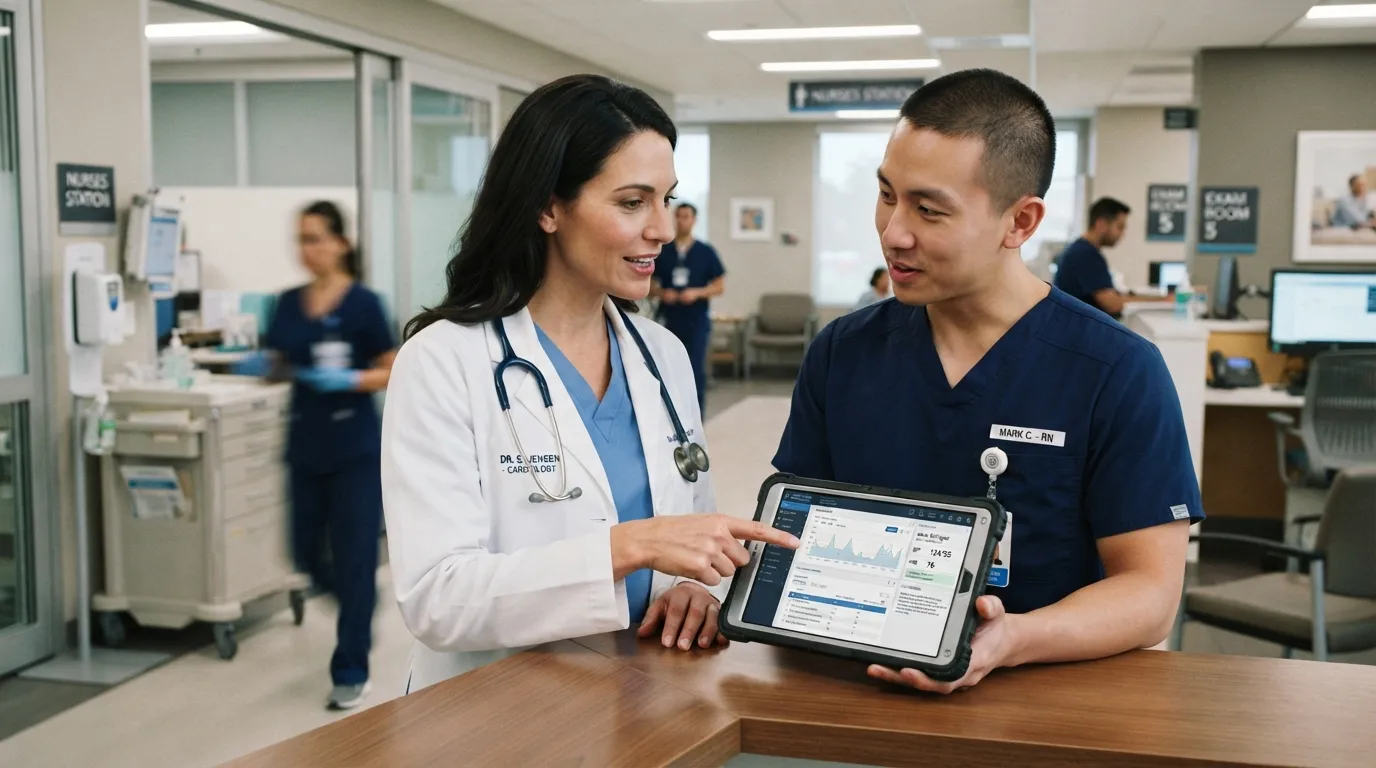
Most clinics start with generic practice management software and eventually hit the same wall: the platform doesn't fit their actual patient workflow, forces workarounds for compliance requirements, or charges per-provider fees that scale badly as the practice grows. Custom healthcare software solutions solve this by being built around the clinic's real operations instead of a generic template.
This guide covers what these systems actually need to include, how they differ from off-the-shelf options, and what to prioritize when building one.
What Are Custom Healthcare Software Solutions?
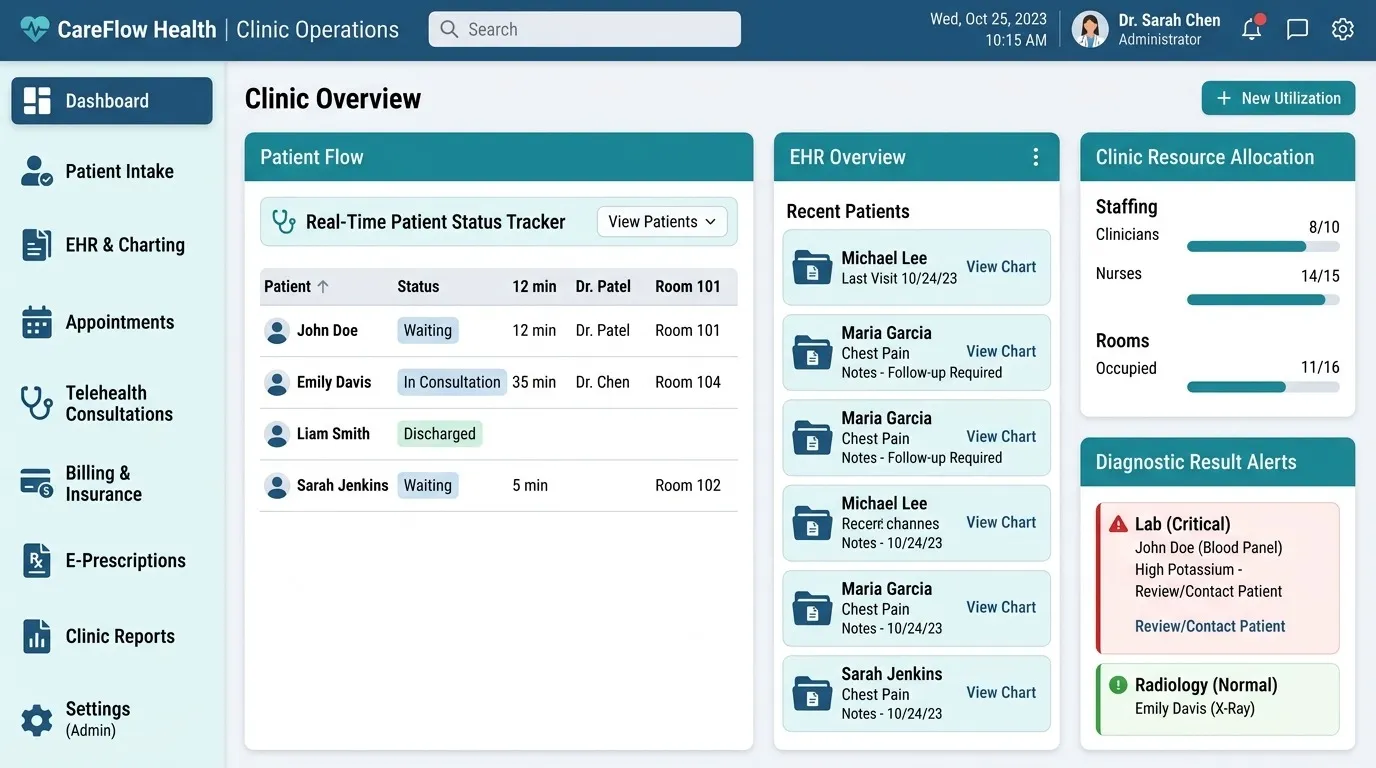
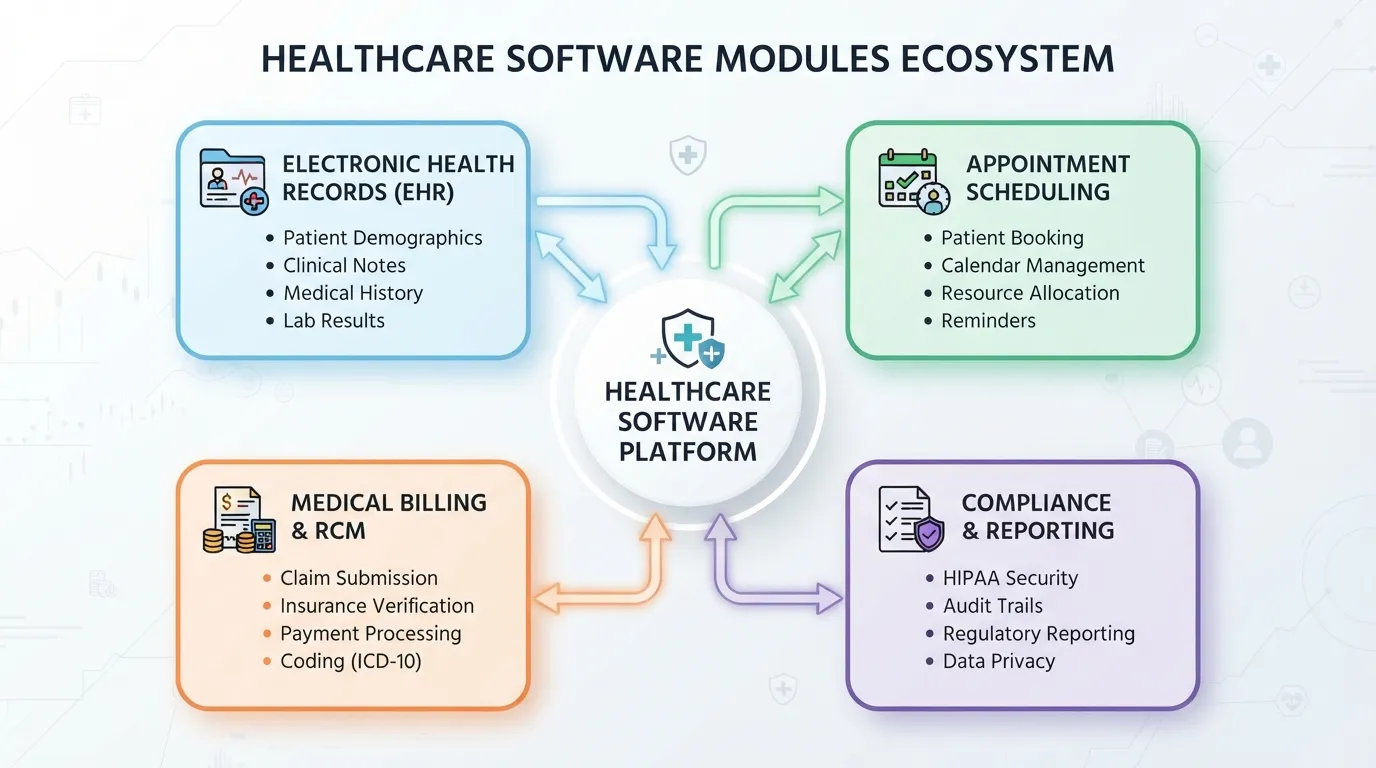
A custom healthcare software system is built specifically for a clinic, hospital, or practice's workflow—patient scheduling, electronic health records (EHR), billing, and compliance reporting—rather than a one-size-fits-all platform every practice configures the same way.
According to the Office of the National Coordinator for Health IT, EHR adoption has become near-universal among U.S. practices, but system fit and interoperability remain the biggest ongoing challenges—which is precisely the gap custom-built systems are designed to close.
Core Requirements for Healthcare Software
1. Compliance and Data Security
Any custom healthcare software system handling patient data must be built around strict privacy and security requirements. This isn't optional—it should be considered from the architecture phase onward, not bolted on afterward. Note: specific compliance requirements vary by country and practice type—always verify current requirements with a qualified compliance professional before launch.
2. Electronic Health Records (EHR) Integration
Whether built from scratch or integrated with an existing EHR, patient records need to be accessible, accurate, and properly access-controlled by role (physician, nurse, or billing staff).
3. Appointment Scheduling
Real-time scheduling that prevents double-booking, sends automated reminders, and reduces no-shows is one of the highest-ROI features in healthcare software system builds.
4. Billing and Insurance Processing
Custom billing modules can handle a practice's specific insurance partnerships and billing codes more precisely than generic software forces.
5. Patient Communication
Secure messaging, appointment reminders, and results notifications reduce phone call volume and improve patient experience.
Custom vs. Off-the-Shelf Healthcare Software
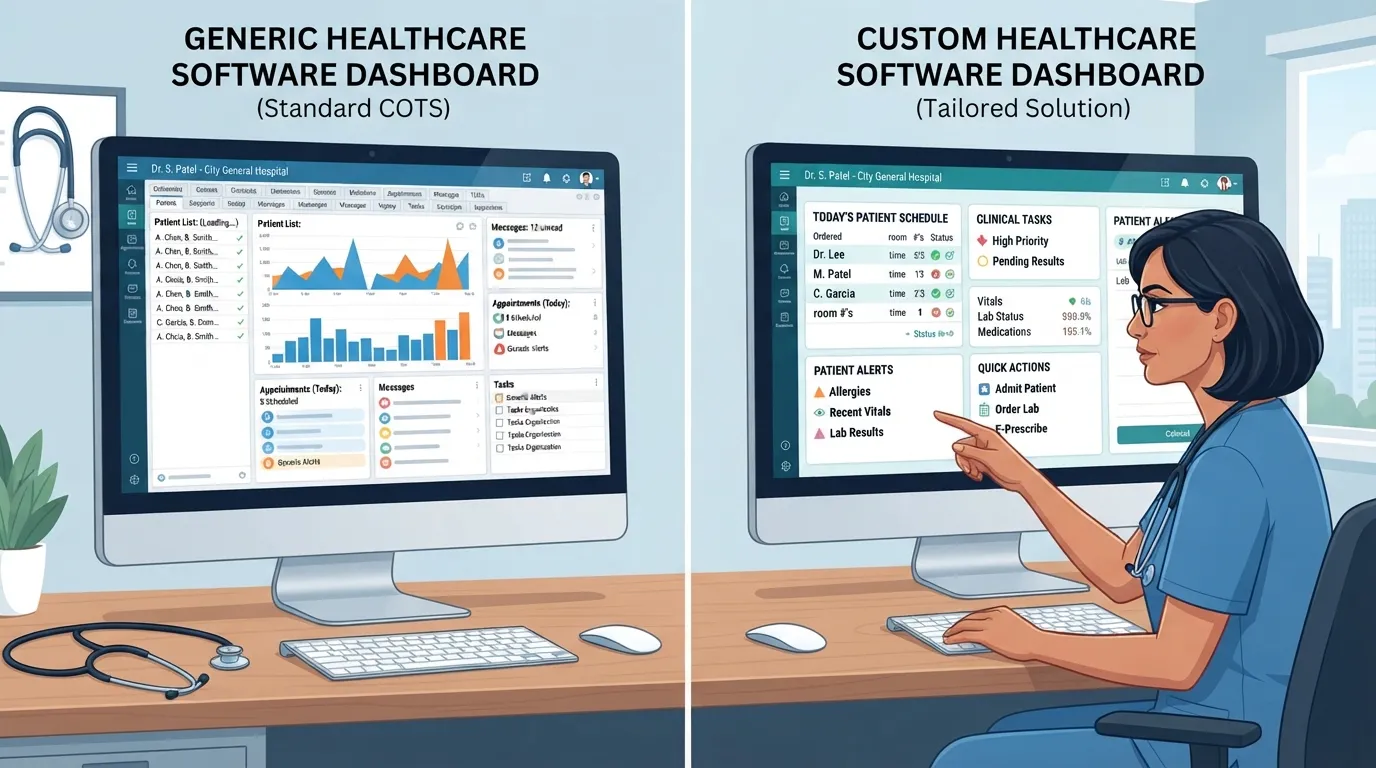
Feature Off-the-Shelf Custom Workflow fitGeneric requires workarounds. Matches actual clinic process Licensing cost: Recurring per-provider fees One-time build and maintenance integration Limited to vendor's partners Built for your specific tools Ownership: Vendor-controlled practice owns the system development process for healthcare software.
1. Requirements & Compliance Mapping
Before development starts, workflows and applicable compliance requirements need to be fully documented—this phase is more critical in healthcare than almost any other industry.
2. EHR Architecture & Data Modeling
The patient data structure gets designed with security and access control built in from the start.
3. Module Development
Scheduling, records, billing, and communication modules are typically built and rolled out incrementally.
4. Security Testing
Given the sensitivity of patient data, security testing deserves significant dedicated time beyond standard QA.
5. Staff Training & Rollout
Clinical staff need hands-on training, since adoption failure is a common cause of healthcare software projects underperforming post-launch.
Frequently Asked Questions
How long does custom healthcare software development take?
Most builds take 4-10 months depending on scope—a single-clinic scheduling and records system is faster than a multi-location platform with complex billing integrations.
Is custom healthcare software more secure than off-the-shelf options?
Not automatically—security depends on how the system is architected and maintained, not simply whether it's custom or off-the-shelf. Both approaches require rigorous security practices.
Can custom software integrate with existing EHR systems?
In most cases, yes—custom systems are often built specifically to integrate with or extend an existing EHR rather than replace it entirely.
Do small practices need custom software, or is that only for hospitals?
Small practices with specific specialties or workflows (not well served by generic templates) often benefit as much as larger hospital systems, sometimes more, since off-the-shelf software is usually designed around larger, generic use cases.
Final Thoughts
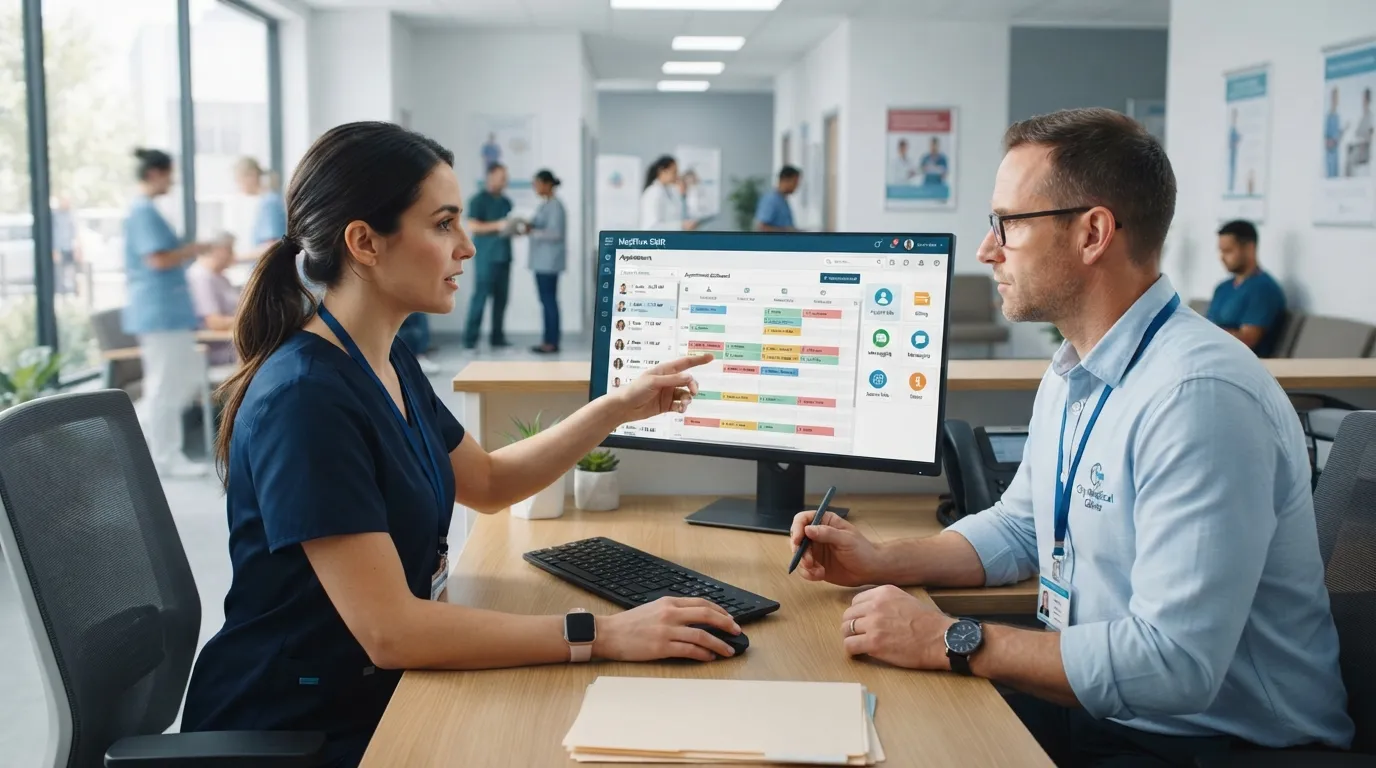
Custom healthcare software isn't the right call for every practice—a well-configured off-the-shelf system can work fine for standard workflows. But for practices with specific compliance needs, unique patient workflows, or growing costs from per-provider licensing, a custom-built system usually solves problems generic software can't.
Ready to Build Custom Healthcare Software?
DevGlim builds custom healthcare software tailored to how your practice actually operates. See our SaaS development services or get in touch to discuss your specific requirements.