Property Management Software: Automating Rent, Maintenance, and Reporting
How automated property management software solves late rent tracking, scattered maintenance requests, and manual accounting for landlords.
DevGlim Team
September 11, 2026
Looking to build this instead of buying it? See our Custom Real Estate Software Built Around Your Operation service →

Managing multiple rental properties manually often means tracking rent payments in spreadsheets, receiving maintenance requests by phone or text, and reconciling accounting by hand at month-end. An automated property management system centralizes all of this, removing the manual coordination that scales poorly as a portfolio grows.
A Real-World Example: From Spreadsheets to Automated Tracking
Consider a landlord managing a dozen units through a spreadsheet for rent tracking and a group text thread for maintenance requests. Late payments were easy to miss, and maintenance requests got lost between messages. After implementing property management ERP software with automated rent reminders and a structured maintenance request system, missed payments and lost maintenance tickets dropped significantly since everything was routed through one trackable system instead of informal channels.
Core Problems Property Management Software Solves
1. Manual Rent Tracking
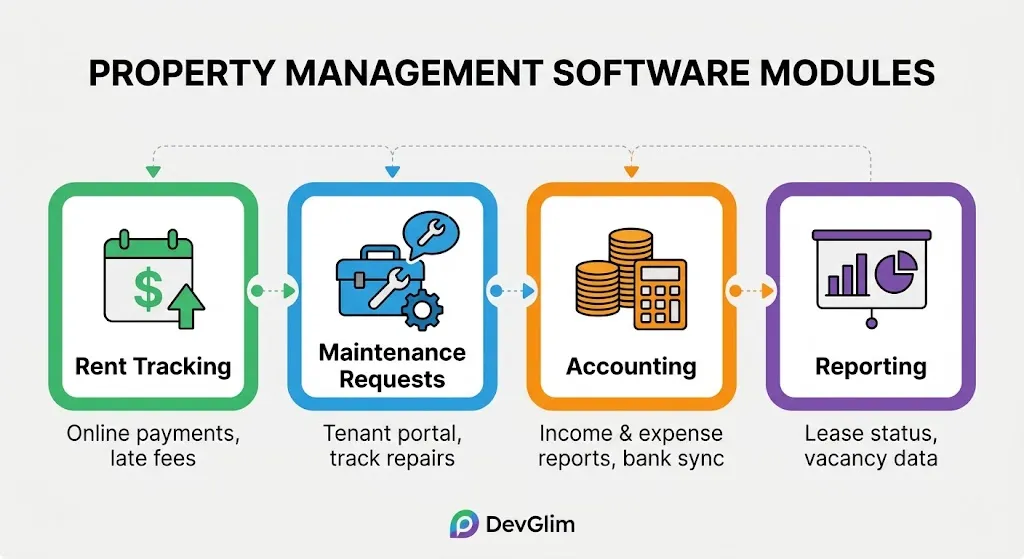
Automated rent collection and late-payment reminders remove the need to manually chase tenants or track payments in a spreadsheet.
2. Scattered Maintenance Requests
A structured request system (rather than phone calls or texts) ensures maintenance issues are logged, assigned, and tracked to completion.
3. Disconnected Accounting
A property management accounting system built into the platform consolidates rent income, expenses, and reporting automatically, rather than requiring manual reconciliation.
4. Poor Multi-Property Visibility
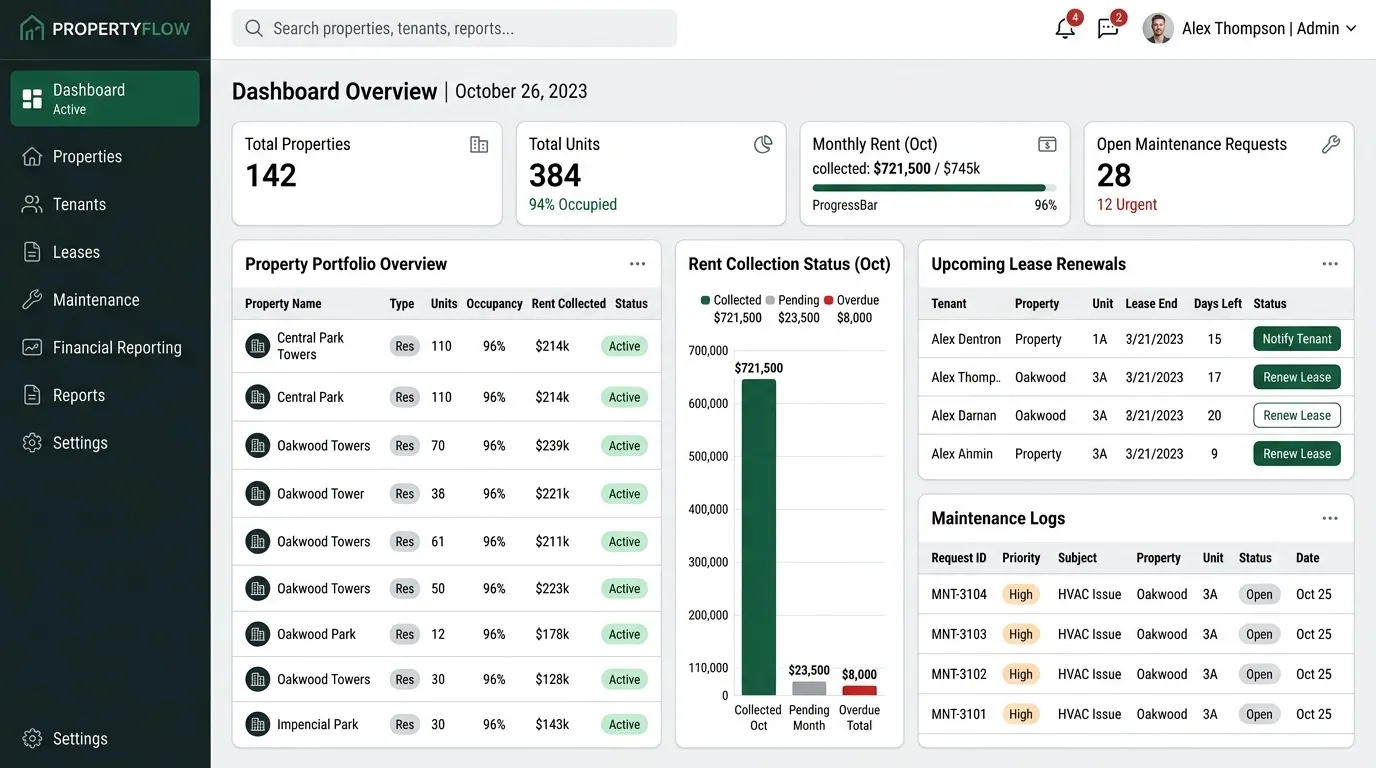
For landlords managing multiple units or buildings, centralized dashboards provide visibility across the entire portfolio instead of unit-by-unit manual tracking.
Off-the-Shelf vs. Custom Property Management Software
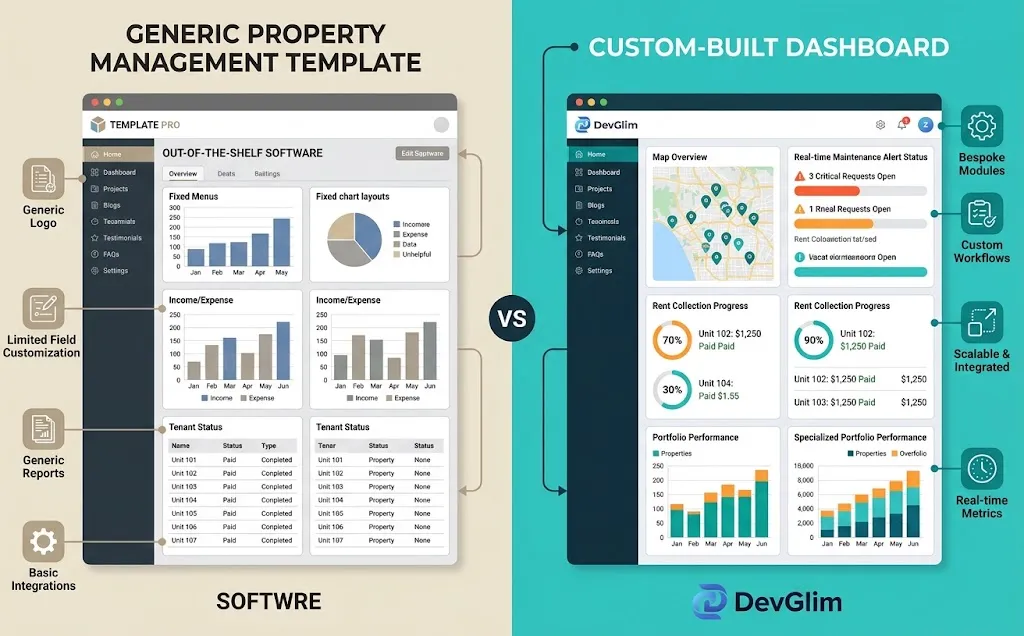
Feature: Off-the-Shelf Software Custom-Built Software Accounting Integration Limited to supported platforms Built to connect with your specific tools Maintenance workflow generic templates Built around your actual process pricing Per-unit recurring fees One-time build, scales without per-unit costs reporting Fixed report templates Built around your specific portfolio metrics If you also manage tenant relationships and leads, our real estate CRM automation guide covers complementary principles for tenant and prospect communication.
Frequently Asked Questions
Is property management software worth it for a small number of units?
Even landlords with a handful of units often benefit from automated rent tracking and maintenance logging, since manual tracking errors tend to compound as a portfolio grows.
Can this software integrate with existing accounting tools?
Yes—custom property management systems are commonly built to sync with existing accounting software rather than replacing it entirely.
Does automated rent tracking help with late payments?
Yes—automated reminders sent before and after due dates typically reduce late payments compared to manual follow-up.
How long does it take to implement property management software?
Timelines vary by portfolio size and feature scope, but core rent and maintenance tracking modules typically launch within several weeks to a few months.
Final Thoughts
Rent tracking and maintenance coordination that work fine for a handful of units become unmanageable at scale without proper systems. Automated property management software removes that ceiling before it becomes a costly, error-prone bottleneck.
Ready to Build Custom Property Management Software?
DevGlim builds custom property management systems tailored to your portfolio's specific needs. See our industry systems services or get in touch to discuss your requirements.