MVP Development: Scope, Cost Drivers and What to Cut
An MVP is the smallest product that tests whether people want what you are building. Most overruns come from scope, not from technology.
DevGlim Team
November 10, 2026

Looking to build this instead of buying it? See our MVP Development for Startups & New Products service →
A minimum viable product (MVP) is the smallest version of a product that lets you learn whether customers want it. It is not a low-quality product or a demo; it is a deliberately narrow one.
Define the one question the MVP answers
Write it as a sentence: "Will small clinics pay to automate appointment reminders?" Every feature must help answer that question. If it does not, it waits.
A simple way to cut scope
- List everything you imagine the product doing.
- Mark what is needed for one user to complete the core journey end to end.
- Replace expensive features with manual work behind the scenes (you can approve orders by hand before building automation).
- Use existing services for non-differentiating parts: authentication, payments, email, hosting.
What drives MVP cost
- Number of user roles and permission rules.
- Integrations with payments, maps, messaging or other systems.
- Platforms: web only, or iOS and Android as well.
- Design depth: a clean, simple interface versus a custom design system.
- Admin tools and reporting, which are often forgotten.
- Quality bar: automated tests, security review and monitoring.
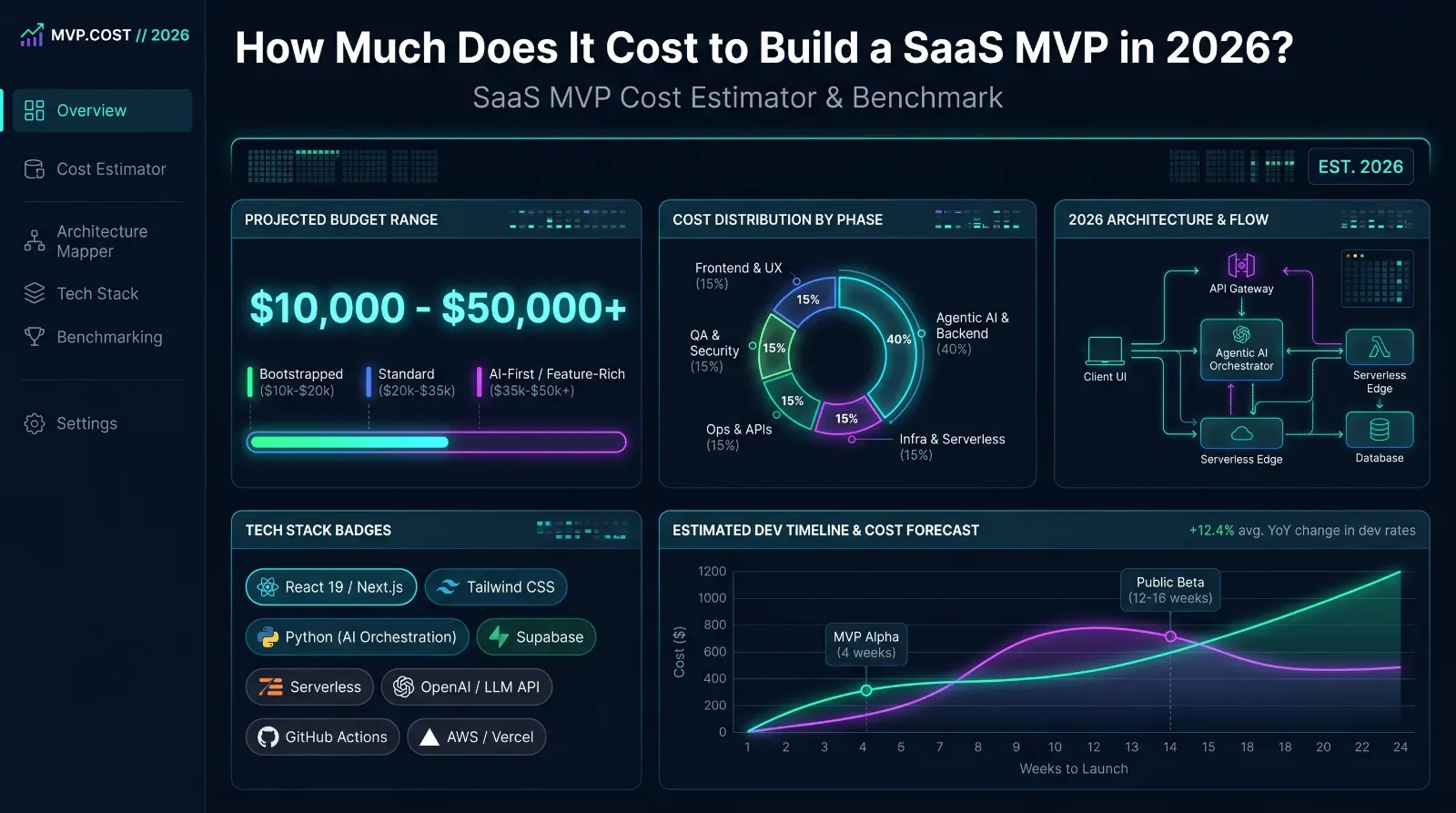
Because these vary so much, treat any number you read online as a rough range, and get a scoped estimate against your own feature list.
After launch
Plan for the work that follows: fixing what users trip over, analytics to see what they actually do, and a decision rule for what to build next. An MVP without measurement only tells you that something shipped.
We help founders scope and build MVPs on technology that can grow into the full product. See MVP development for startups, and use the pricing guide to understand how estimates are built.