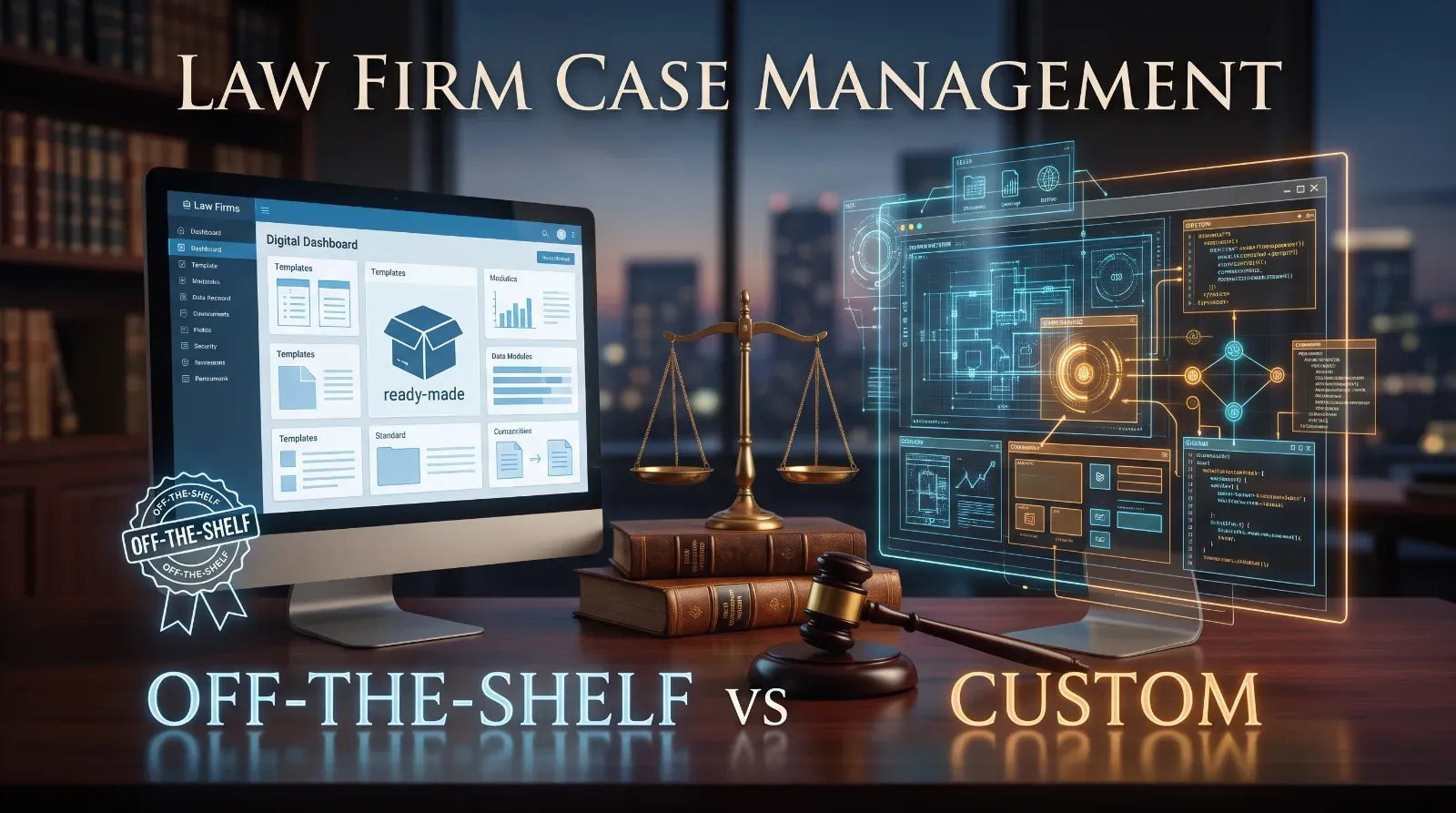
Law Firm Case Management: Off-the-Shelf vs Custom
Case management tools suit many firms, but some need something tailored. Here is how to compare off-the-shelf and custom software.
DevGlim Team
November 19, 2026
Looking to build this instead of buying it? See our Custom Legal Practice Management Software service →
Case management software keeps matters, documents, deadlines and billing in one place. Many firms use an off-the-shelf product successfully, while others need something tailored. Rules and ethics requirements vary by jurisdiction, so check with your regulator or bar before choosing.
What case management software has to cover
- Matters, clients and contacts
- Documents and version control
- Deadlines, tasks and reminders
- Time tracking and billing
Reporting on workload and revenue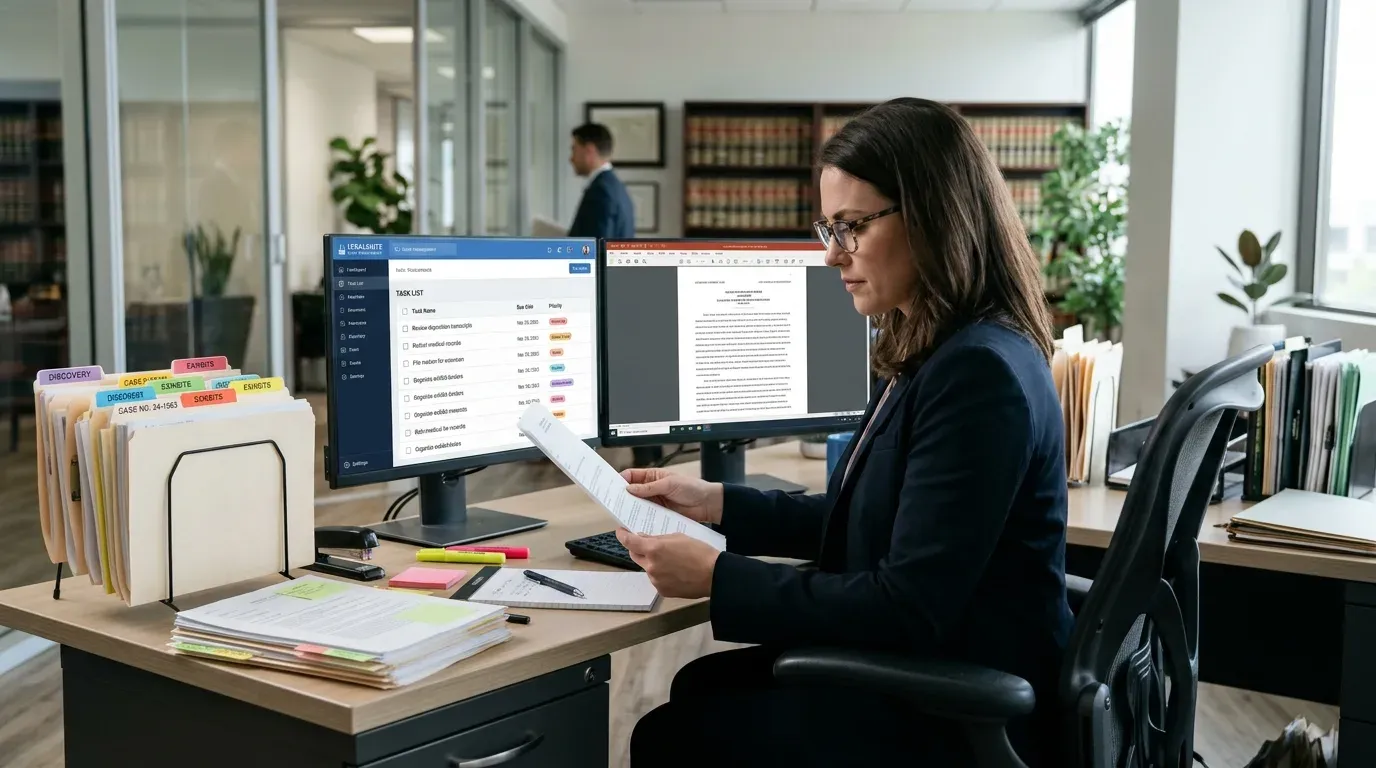 Where off-the-shelf software works well
For a standard practice, a ready-made product is quick to adopt and maintained by the vendor. It often includes templates, billing and integrations you would otherwise build yourself. Review each vendor's current features and pricing against your list.
When custom is worth considering
- Your practice area has unusual workflows or document steps
- You need integrations with internal or client systems
- Per-user fees are large and growing
- You want control over data, reporting and the roadmap
Off-the-shelf tools force costly workarounds Security and confidentiality
Client confidentiality is central. Ask about:
- Encryption of stored and transmitted data
- Role-based access and matter-level permissions
- Audit logs
- Where data is hosted and who can access it
- Backups and recovery
Whichever route you take, security needs to be reviewed, not assumed.
Integrations that matter
Email, calendar, document storage, e-signature and accounting are the usual ones. List the essential links so each option can be tested against them.
Cost and maintenance
Subscription software spreads cost over time and grows with headcount. Custom software costs more upfront and needs maintenance, but running costs can stay flatter. Compare total cost over three to five years.
Next step
Map one typical matter from intake to closing and mark every step done outside your software. Those steps show whether a standard product is enough.