Enterprise Application Development Services: A Complete Guide
A practical guide to enterprise application development services — what they cover, how the process works, and what to evaluate in a development partner.
DevGlim Team
August 3, 2026
Looking to build this instead of buying it? See our Custom Software Development Services service →
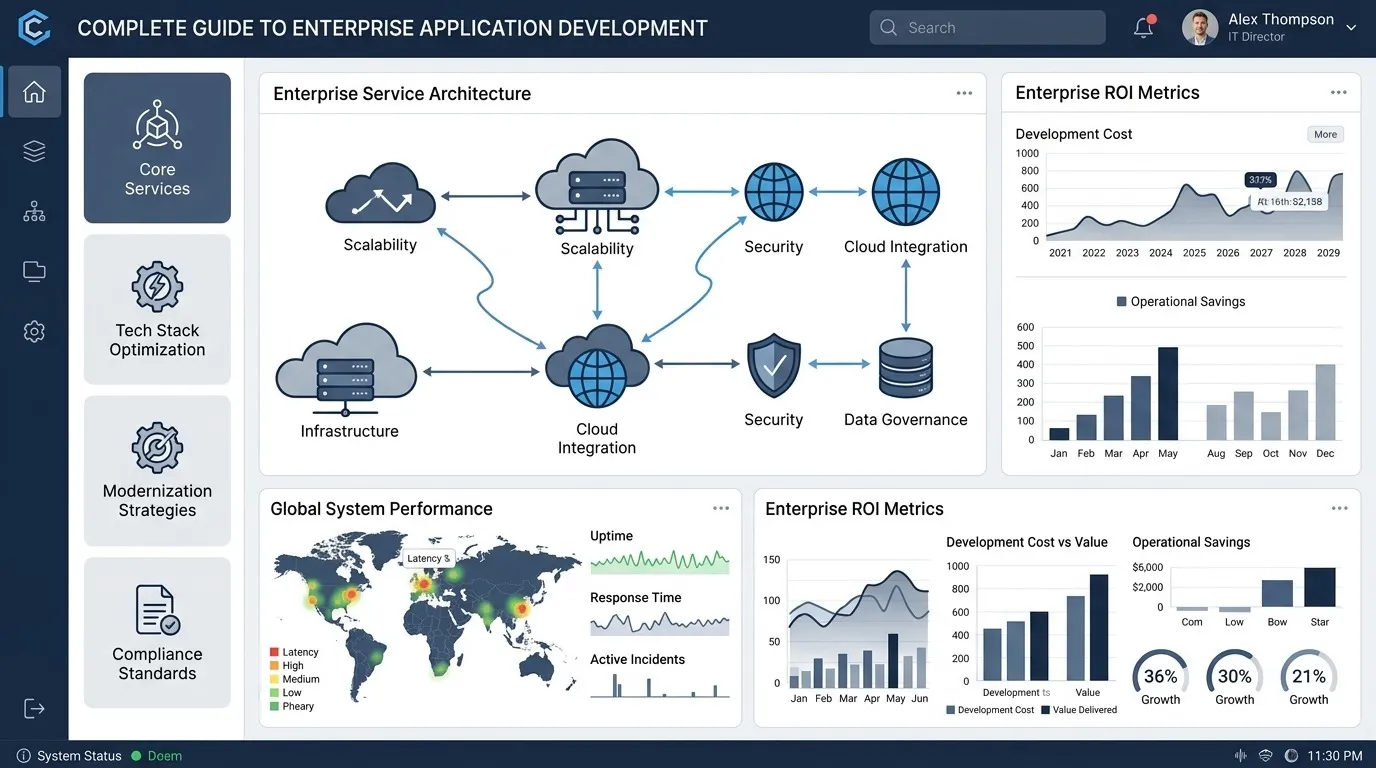
Enterprise application development services cover the design, build, and long-term support of software built specifically for large organizations — systems that need to handle scale, integrate with existing infrastructure, and meet security and compliance requirements that consumer or SMB software rarely has to consider.
What Are Enterprise Application Development Services?
Unlike a typical business app, enterprise applications are usually built to serve thousands of internal or external users, integrate with several existing systems (ERP, CRM, identity providers, legacy databases), and run under strict uptime, security, and audit requirements. Enterprise application development services span custom platform builds, legacy modernization, systems integration, and long-term maintenance of mission-critical software.
Common Types of Enterprise Applications
- Internal operations platforms — workflow, inventory, HR, and resource management tools built around a specific organization's processes.
- Customer-facing enterprise platforms — portals, self-service tools, and account management systems for large customer bases.
- Data and reporting platforms — systems that unify data across departments for reporting and decision-making.
- Integration layers — middleware that connects existing systems (ERP, CRM, legacy databases) so they work together.
Build vs. Buy: Why Enterprises Choose Custom Development
Large organizations often start with off-the-shelf enterprise software (SAP, Salesforce, etc.) and hit a wall when their processes don't fit the vendor's model, or licensing costs balloon with headcount. Custom enterprise application development becomes worthwhile when a process is unique enough, or important enough competitively, that forcing it into a generic tool costs more in workarounds than building it right would.
The Enterprise Application Development Process
- Discovery and systems audit — mapping existing infrastructure, data flows, and integration points before any design work starts.
- Architecture and security planning — designing for scale, uptime, and compliance requirements from day one, not as an afterthought.
- Iterative development — building in phases with regular stakeholder review, since enterprise requirements often surface gradually across departments.
- Integration and migration — connecting to or migrating data from legacy systems, usually the highest-risk phase of the project.
- Deployment and change management — rolling out to large user bases requires training and phased adoption, not a single cutover.
- Ongoing support — enterprise software is rarely "done"; it needs a maintenance and support plan from the outset.
Security, Compliance, and Scalability Considerations
Enterprise applications typically need to satisfy requirements that smaller projects can skip: role-based access control, audit logging, data residency rules, and — depending on industry — compliance frameworks like SOC 2, HIPAA, or GDPR. Scalability planning also matters more: an internal tool used by 20 people has very different infrastructure needs than one used by 20,000.
Choosing an Enterprise Application Development Partner
Look for a team that has actually worked with organizations your size, asks about your existing systems before proposing a solution, and can speak concretely about security and compliance — not just development speed. Ask how they handle legacy system integration specifically, since that's usually where enterprise projects succeed or fail.
Frequently Asked Questions
How is enterprise application development different from regular software development?
Scale, integration complexity, and compliance requirements. Enterprise projects almost always involve connecting to existing systems and meeting security/audit standards that smaller projects don't need to.
How long does an enterprise application take to build?
Most enterprise projects run from several months to over a year, largely depending on how many existing systems need to be integrated or migrated.
Should we modernize our legacy system or replace it entirely?
It depends on how much of the legacy system still fits your current processes. A proper discovery and systems audit should tell you whether incremental modernization or a full rebuild makes more sense — be wary of any partner who recommends a full rebuild before auditing what you already have.