Docker Swarm vs Kubernetes: Is Kubernetes Always the Right Answer?
Kubernetes is the industry standard, but it is also the most complex option. For small teams and simple services, simpler orchestration, or none, can be the smarter choice.
DevGlim Team
November 13, 2026
Looking to build this instead of buying it? See our SaaS Development service →
Container orchestrators run groups of containers across machines, restart them when they fail, roll out updates and balance traffic. Kubernetes dominates this space. Docker Swarm is Docker's simpler built-in alternative. The honest question is how much orchestration your product actually needs.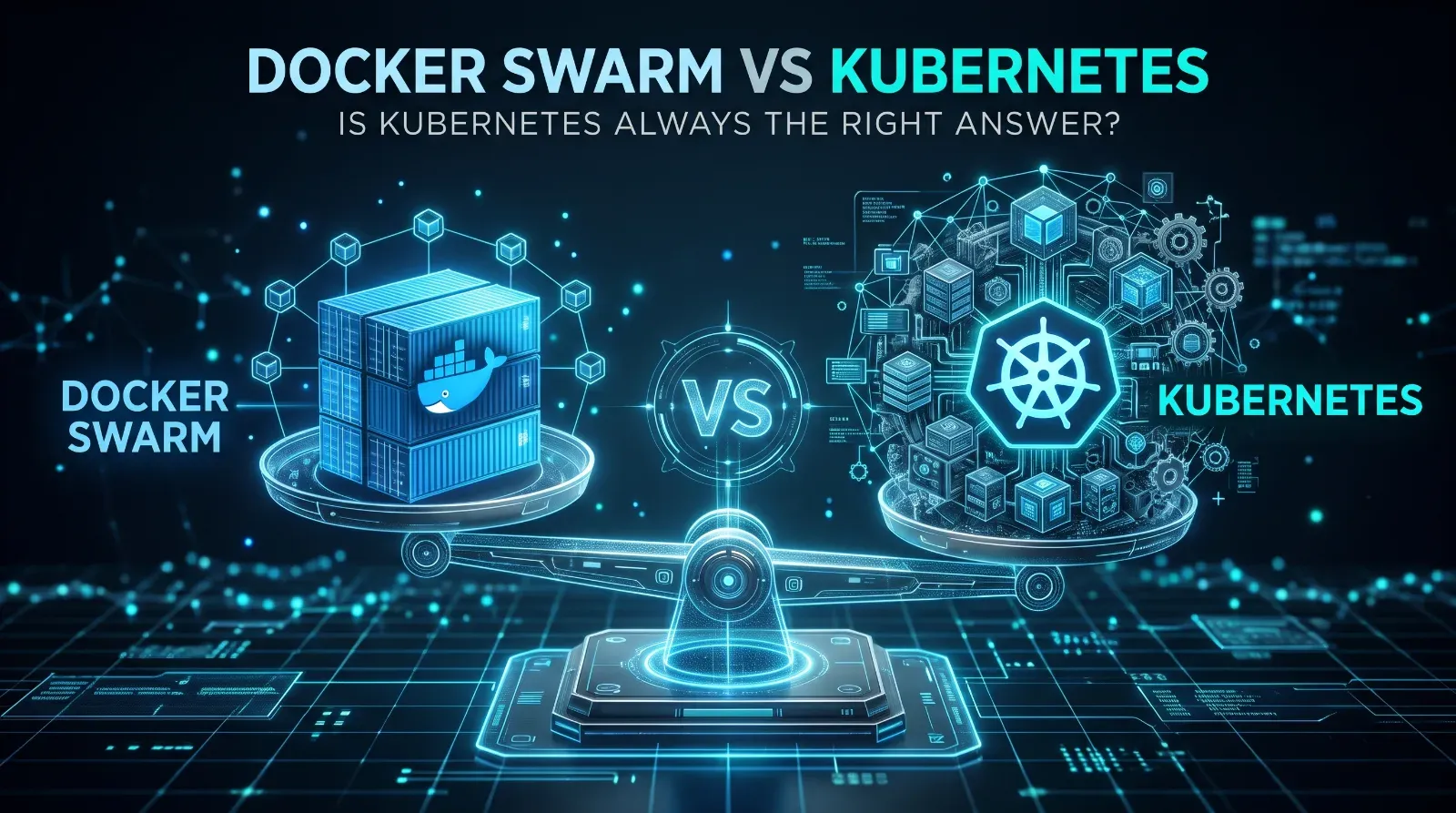
Docker Swarm
- Built into Docker; setup is a few commands.
- Uses concepts and Compose-style files that Docker users already know.
- Covers the basics: replicas, rolling updates, service discovery, secrets.
- Smaller ecosystem and slower pace of development than Kubernetes, so check that it fits your long-term plans.
Kubernetes
- Very rich feature set: autoscaling, flexible networking, custom resources, fine-grained access control.
- Huge ecosystem of tools, operators and managed services from the major cloud providers.
- Steeper learning curve and more moving parts to secure, monitor and upgrade.
How to decide
- One or two services on a few servers? Plain Docker Compose or Swarm may be enough. Not every product needs a cluster.
- Many services, multiple teams, need for autoscaling or multi-region? Kubernetes earns its complexity, ideally as a managed service so you do not run the control plane yourself.
- Hiring and tooling. More engineers and vendors know Kubernetes, which lowers long-term risk.
- Cost of operation. Count the engineer time to run the platform, not just the servers.
A sensible path for many SaaS products is to start simple, keep services containerised and configuration in environment variables, and move to managed Kubernetes when scale or team size demands it. That keeps the migration cost low. We build and deploy SaaS platforms and can help choose a deployment model that matches your stage.