Custom Banking Software Development: Security, Compliance and Process
A practical guide to custom banking software security, compliance, integrations, delivery process and the build-versus-buy decision.
DevGlim Team
September 7, 2026 · Updated September 30, 2026
Looking to build this instead of buying it? See our Custom Banking & Fintech Software Development service →

Banks and fintech companies face a unique problem: off-the-shelf banking platforms are rarely built for a specific institution's regulatory environment, product mix, or customer base. Custom banking software development solves this by building systems around the institution's actual operations and compliance obligations, rather than forcing a generic core banking platform to fit.
This guide covers what custom banking software needs to include, the security and compliance considerations involved, and how the development process typically works.
What Is Custom Banking Software Development?
Banking custom software refers to systems built specifically for a bank, credit union, or fintech company—covering core banking functions, payments processing, customer account management, and compliance reporting—rather than configuring a generic vendor platform.
According to the Office of the Comptroller of the Currency, technology risk management is a core supervisory focus for financial institutions, underscoring why architecture and security decisions in banking software carry higher stakes than in most other industries.
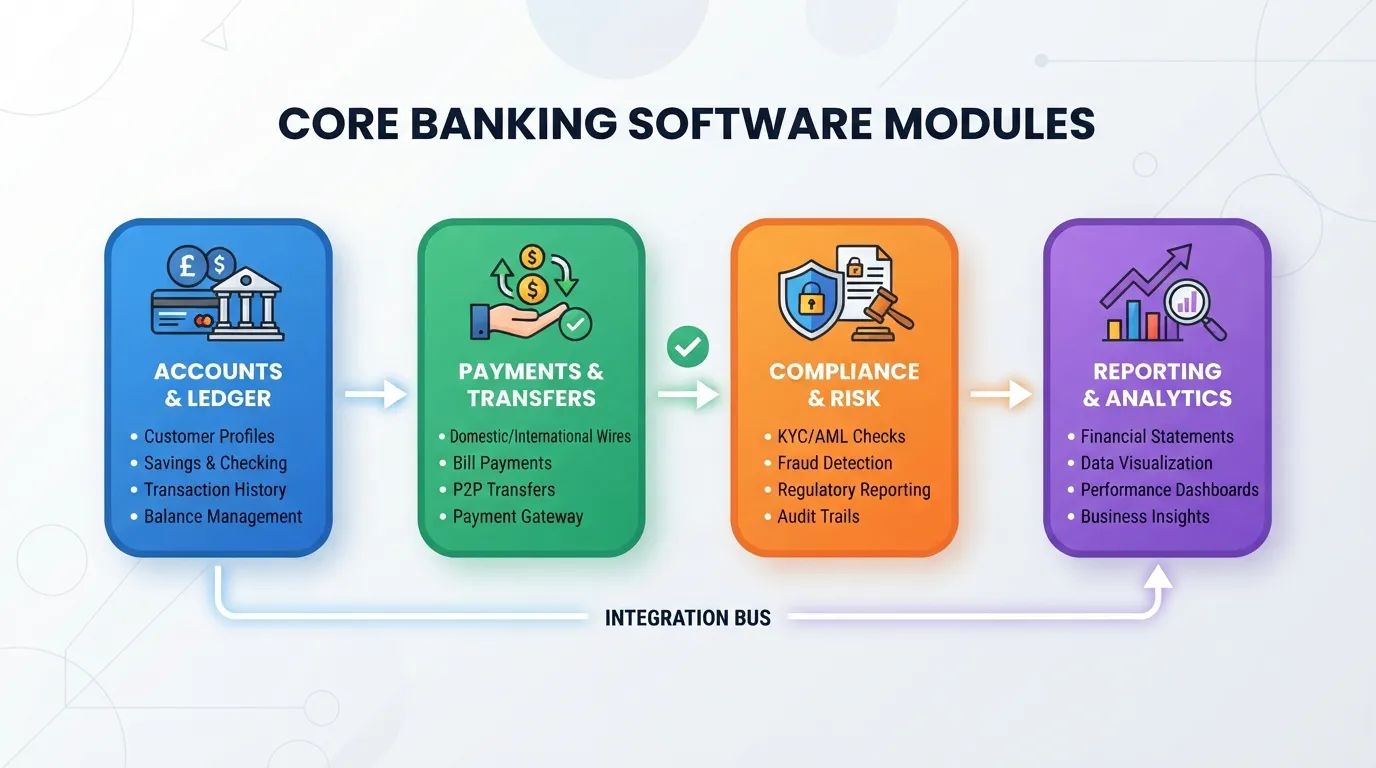
Core Requirements for Banking Software
1. Security Architecture
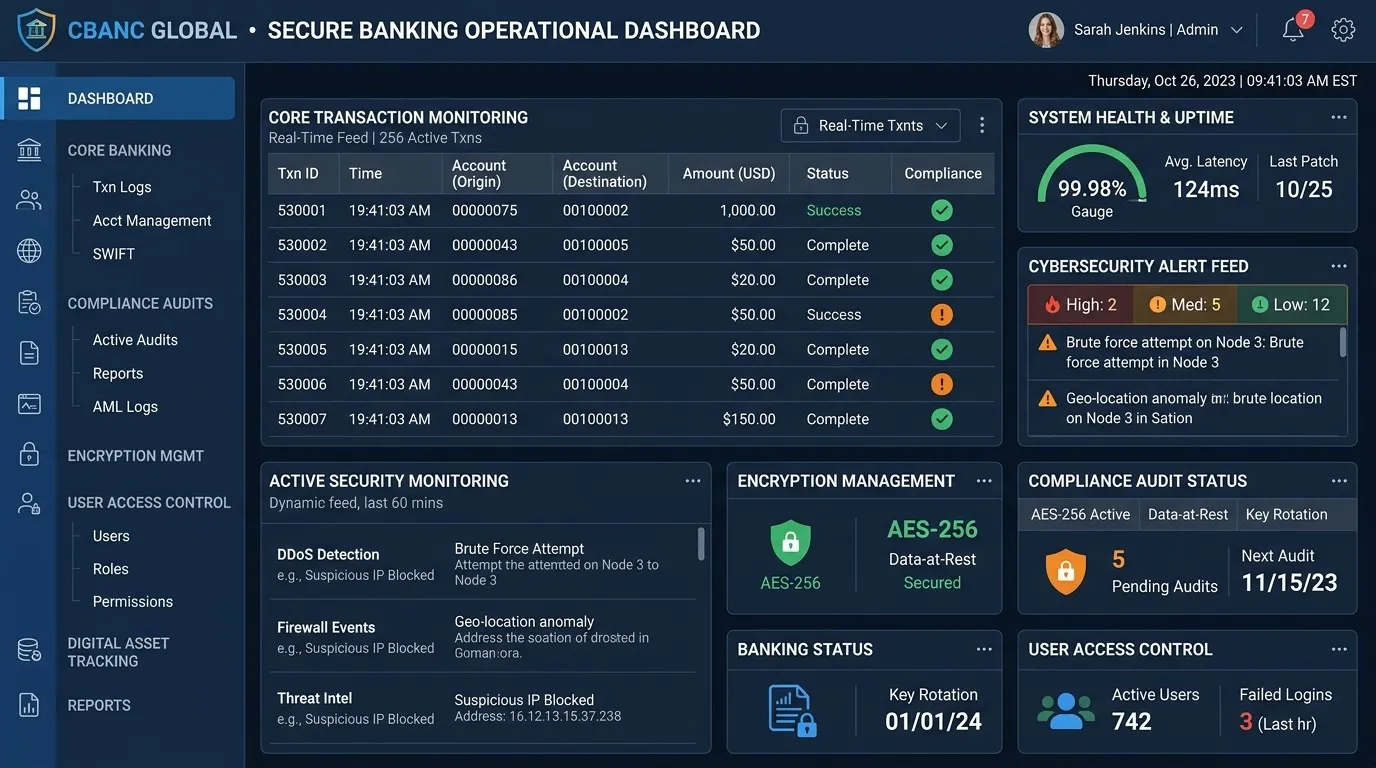
Banking software requires security considerations built into the architecture from day one—encryption, access controls, and fraud detection are foundational, not optional add-ons.
2. Regulatory Compliance
Financial institutions operate under strict, jurisdiction-specific regulatory requirements. Note: compliance requirements vary significantly by country and institution type—always verify current obligations with qualified legal and compliance counsel before development and launch.
3. Core Account Management
Account opening, balance tracking, transaction history, and statement generation need to be accurate, auditable, and available in real time.
4. Payment Processing
Whether handling transfers, card payments, or third-party payment gateway integration, this is one of the most security-sensitive components of any custom financial software development project.
5. Fraud Detection & Monitoring
Automated transaction monitoring for unusual activity is a standard expectation in modern banking software, not an advanced feature.
Custom vs. Off-the-Shelf Banking Platforms
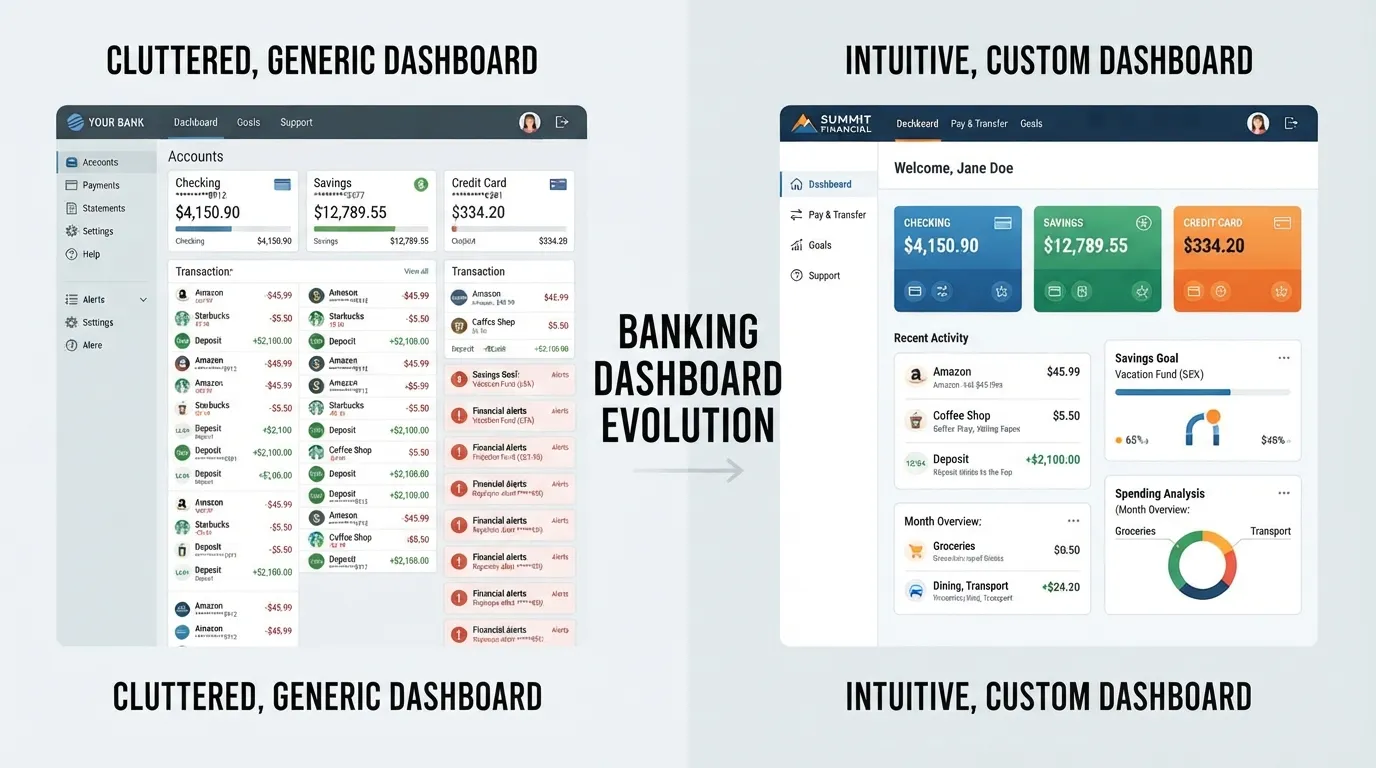
Product and workflow fit
An established banking platform can reduce delivery risk for standard products and processes. Custom development is more appropriate when a differentiated product, legacy integration or jurisdiction-specific workflow cannot be configured safely.
Compliance and vendor risk
Neither option is compliant by default. Evaluate data location, access controls, audit evidence, subcontractors, incident response, business continuity, change management and exit provisions with qualified legal, security and compliance specialists.
Cost and operating model
A vendor platform concentrates licensing and implementation costs; a custom system adds engineering, infrastructure, security testing and long-term support. The institution must have a clear operating owner whichever model it selects.
Development Process for Custom Banking Software
1. Regulatory & Requirements Mapping
Compliance obligations and business requirements are mapped together from the start, since retrofitting compliance later is far more costly than building around it from day one.
2. Security Architecture Design
Data encryption, access control, and audit logging are designed before any feature development begins.
3. Core Module Development
Account management, payments, and reporting modules are typically built and tested incrementally.
4. Security & Penetration Testing
Given the stakes involved, banking software typically requires more extensive security testing than standard business software.
5. Compliance Review & Rollout
A compliance review—ideally involving legal/regulatory counsel—should precede any production launch.
Security Control Checklist
- Threat modeling and architecture review before implementation.
- Encryption in transit and at rest with documented key management.
- Least-privilege access, strong authentication and segregation of duties.
- Immutable audit trails for sensitive data and administrative actions.
- Secure development, dependency review, code review and environment separation.
- Independent security testing, vulnerability management and remediation ownership.
- Backups, recovery testing, monitoring and incident-response exercises.
What Discovery Should Produce
A credible discovery phase should produce a system context diagram, data classification, regulatory requirements matrix, integration inventory, threat model, module backlog, migration plan, acceptance criteria and phased delivery estimate. It should also state which decisions require approval from compliance, security, operations and executive stakeholders.
Use the custom versus off-the-shelf decision guide to structure the initial build, extend or buy discussion before commissioning a detailed assessment.
Frequently Asked Questions
How long does custom banking software development take?
Timelines vary widely with scope, integrations, migration, assurance and regulatory review. A narrow module can be phased sooner than a core replacement. Commit to a schedule only after discovery identifies dependencies, review gates and acceptance criteria.
Is custom banking software more secure than established platforms?
Not automatically—security depends on the architecture, ongoing maintenance, and testing rigor, not simply whether the system is custom-built.
Can custom banking software integrate with existing core banking systems?
Yes, this is common—custom software is often built to extend or integrate with an existing core system rather than replace it entirely.
Is custom development only viable for large banks?
No—fintech startups and smaller credit unions increasingly use custom development specifically because off-the-shelf platforms don't fit their more specialized product offerings.

Final Thoughts
Custom banking software isn't necessary for every institution—well-configured established platforms can work for standard retail banking needs. But for institutions with specific compliance environments, unique product offerings, or integration needs generic platforms can't accommodate, custom development is often the more reliable long-term path.
Ready to Build Custom Banking Software?
DevGlim builds custom software for financial institutions and fintech companies with security, auditability and integration requirements designed into the delivery plan. Final compliance decisions remain with the institution and its qualified advisers. See our SaaS development services or get in touch to discuss your specific requirements.