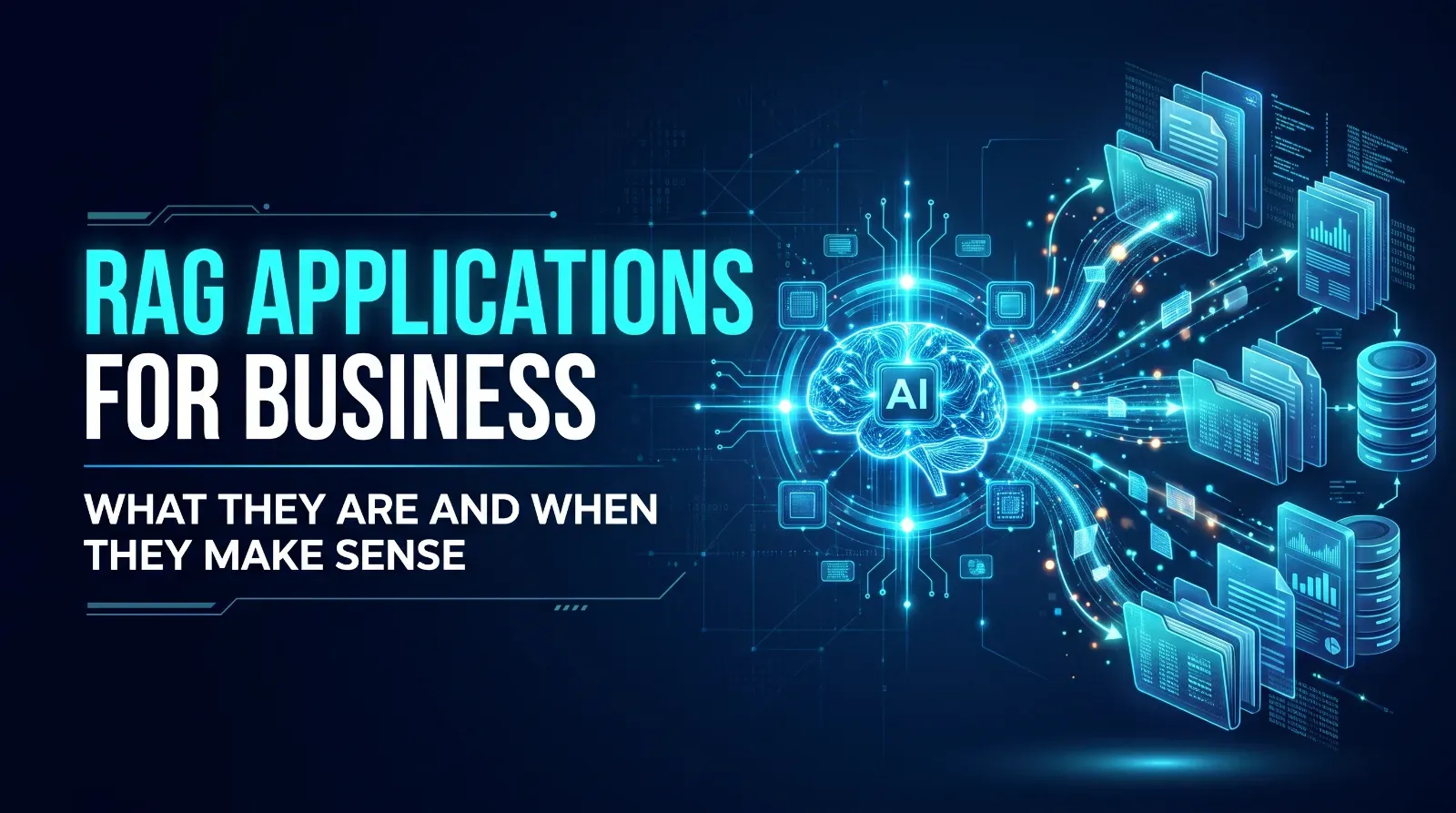
AI Customer Support Agents vs Chatbots: What Is the Difference?
Not every support bot is an agent. Here is how chatbots and AI agents differ, and what suits your customers.
DevGlim Team
November 26, 2026
Looking to build this instead of buying it? See our AI Business Automation service →
"Chatbot" and "AI agent" are often used as if they mean the same thing. They do not. The difference matters, because it affects what your support tool can safely do for customers and how much work it takes to build.
What a chatbot does
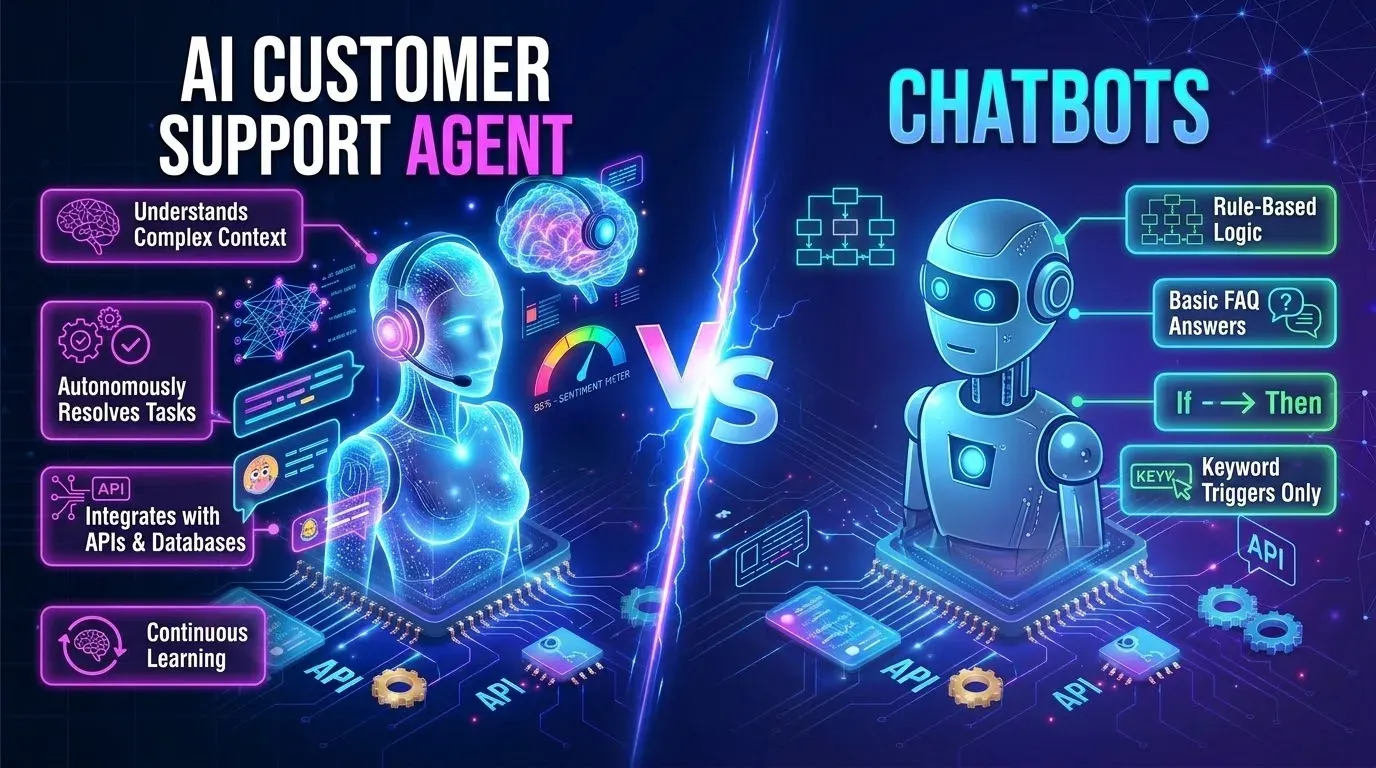
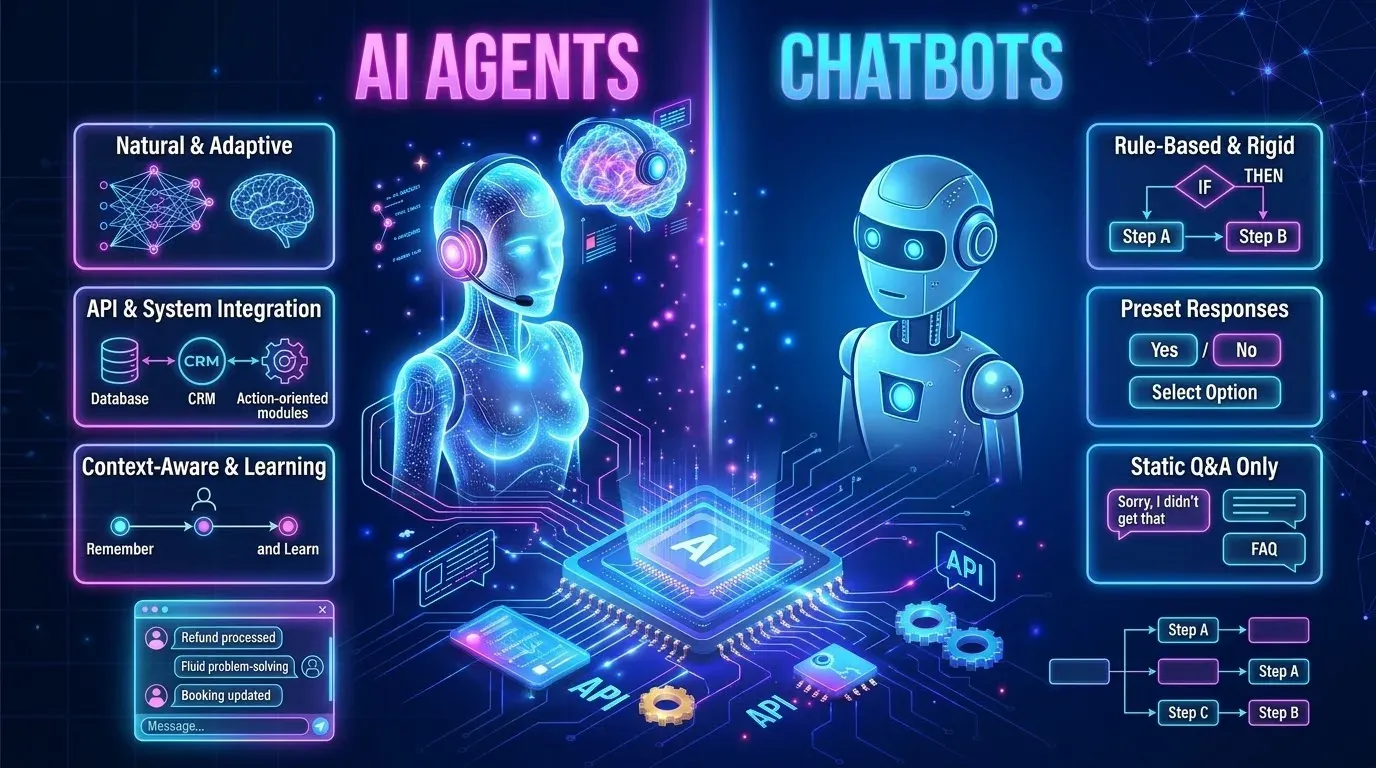
A traditional chatbot answers questions. It follows scripted flows or searches a knowledge base and responds with text. It is good at common questions such as opening hours, delivery times, pricing and policies. Its job is to inform.
What an AI support agent does
An AI agent can take actions as well as answer questions. Connected to your systems, it might look up an order, check booking availability, update an address, create a ticket or start a refund request, within rules you set. Its job is to resolve.
Side-by-side
- Goal: chatbots deflect simple questions. Agents complete tasks.
- Connections: chatbots mostly read from a knowledge base. Agents connect to order, booking, CRM or ticketing systems.
- Complexity: chatbots are simpler and cheaper to launch. Agents need more design, testing and safeguards.
- Risk: agents that take actions need permissions, limits and audit trails.
What to automate first
Start with high-volume, low-risk requests:
- Order and delivery status.
- Appointment changes.
- Password and account help.
- Policy and product questions.
Keep sensitive or emotional cases, such as complaints, billing disputes and safety issues, with people.
Human handoff is essential
Both chatbots and agents should know their limits. A good handoff passes the full conversation and customer details to a human, so people do not have to repeat themselves. Define clear triggers: customer frustration, repeated failure, high-value accounts or specific topics.
Safeguards for agents
- Limit what actions the agent can perform and the values it can change.
- Require confirmation for sensitive actions.
- Log every action for review.
- Test with real conversations before launch and monitor afterwards.
- Make it easy to reach a human at any point.
Which should you choose?
If most of your volume is simple questions, a well-built chatbot may be enough. If customers mostly want things done, such as changes, bookings or lookups, an agent connected to your systems delivers more value. Many businesses start with a chatbot and add actions step by step.
For costs and setup details, see AI Chatbot for Customer Service. To understand agents more broadly, read What Are AI Agents? 12 Real-World Tasks, Tools and Costs. If your customers prefer phone calls, AI Voice Agent Development covers that channel.
Conclusion
Chatbots inform and agents act. Choose based on what your customers actually need, start with low-risk tasks and always keep a clear path to a human.