
GPT‑6 Astra vs Claude Mythos 5.1: Which Is Better for Business AI Automation?
A practical, evidence-based comparison of GPT‑6 Astra and Claude Mythos 5.1 for support, CRM, documents and custom AI agents.
DevGlim Team
September 24, 2026
Looking to build this instead of buying it? See our AI Business Automation service →
Last verified: September 25, 2026.
GPT‑6 Astra and Claude Mythos 5.1 are two highly capable frontier models, but this is not a straightforward comparison for most businesses. OpenAI offers GPT‑6 Astra through its API. Claude Mythos 5.1 exists and has official API model identifiers, but Anthropic limits access to invited organizations participating in trusted-access programs such as Project Glasswing.
That availability difference matters more than many benchmark tables suggest. A business cannot select a model it is not authorized to use. There is also no reliable, protocol-matched independent evaluation proving that either model is universally better for customer support, CRM workflows, document processing or custom business agents.
The practical conclusion is simple: GPT‑6 Astra is directly deployable by more businesses; Claude Mythos 5.1 is mainly relevant to approved organizations; and eligible teams should test both using their own data, tools, security rules and success criteria.
GPT‑6 Astra vs Claude Mythos 5.1 at a glance
FactorGPT‑6 AstraClaude Mythos 5.1
ProviderOpenAIAnthropic
API model IDgpt-6-astraclaude-mythos-5-1
AvailabilityAvailable through the OpenAI API and announced for ChatGPT and cloud platformsActive but invite-only for vetted organizations
Standard input price$10 per million tokens$10 per million tokens
Standard output price$50 per million tokens$50 per million tokens
Cached-input price$1 per million tokens$0.25 per million tokens
Context window1.05 million tokens1 million tokens
Maximum output128,000 tokens128,000 tokens
Knowledge cutoffApril 30, 2026June 2026
Reasoning controlsLow, medium, high, xhigh and max effortAlways-on adaptive thinking with effort controls
Prices and availability were verified from the providers’ official documentation. They may change, so confirm them before procurement or deployment.
OpenAI applies higher rates when a GPT‑6 Astra prompt exceeds 272,000 input tokens. Anthropic lists separate prices for five-minute and one-hour cache writes, with lower-priced cache reads. Equal headline prices therefore do not guarantee equal production costs.
The most important difference: availability
GPT‑6 Astra is positioned as a production model for complex end-to-end work and is accessible through the OpenAI API.
Claude Mythos 5.1 is different. Anthropic describes it as an invite-only model available through Project Glasswing and other trusted-access programs. Its documentation lists identifiers for the Claude API, Amazon Bedrock, Google Cloud and Microsoft Foundry, but having a model identifier does not mean every customer can use it.
Anthropic says Mythos 5.1 shares the specifications and pricing of Claude Fable 5.1. The company primarily differentiates Mythos through restricted access and its handling of highly capable cybersecurity and scientific workloads. For a normal CRM, support or sales-automation project, Fable 5.1 or Opus 5.5 may be a more realistic Claude comparison.
What current comparisons often leave unanswered
Search results for this comparison largely emphasize specification tables, provider benchmarks, coding scores and declarations of a winner. Business buyers need answers to different questions:
• Can the organization obtain production access?
• How reliably does the model call the company’s specific tools?
• What is the cost per successfully completed workflow rather than per token?
• How often does a person need to correct or approve the result?
• Can the system recover safely from API failures and incomplete data?
• Does it follow permissions and escalation rules?
• Can the business audit why an action was proposed or taken?
• What happens when the preferred model is unavailable?
• Which steps should use conventional rules rather than a frontier model?
One current comparison explicitly notes that it lacks a protocol-matched coding benchmark for both models and cannot name a coding leader. The same caution should apply even more strongly to business automation.
Customer-support automation
Both model families can be connected to knowledge bases, ticketing systems, CRMs and human-support queues. The important evaluation is not which model writes the most polished answer.
Test whether each implementation can retrieve the correct policy or account information, identify its evidence, avoid unsupported promises, recognize missing information, escalate sensitive conversations and produce a structured CRM summary. Latency, privacy and peak-load behavior also matter.
A support assistant should normally recommend an action. Deterministic application code should validate permissions and business rules before an account, payment, subscription or customer record changes.
CRM and sales workflows
GPT‑6 Astra’s documented support for tool use, web search, file search, computer use and other Responses API tools makes it a candidate for workflows spanning several applications.
Claude Mythos 5.1 supports tool-based workflows, but Anthropic documents an important constraint: forced tool choices using any or a named tool are not supported for Mythos 5.1 and Fable 5.1. Implementations should use supported selection modes, strict tool definitions or structured outputs where appropriate.
For CRM automation, test lead classification, field extraction, duplicate detection, follow-up drafting, opportunity summaries, scheduling and pipeline updates. Do not let a model send high-impact messages or overwrite customer records without validation, authorization checks, idempotency controls and an audit trail.
DevGlim’s custom CRM development work treats the model as one controlled component inside the wider workflow.
Document processing
The large context windows offered by both models can be useful for contracts, policies, reports, support histories and technical documentation. Context size alone does not measure document-processing quality.
A useful evaluation should include scanned and digital documents, tables, footnotes, missing information, conflicting versions, exact field extraction, evidence references and documents containing instructions that must be treated as untrusted content.
For recurring document collections, prompt caching can materially affect cost. Claude Mythos 5.1 lists cheaper cache reads, while GPT‑6 Astra applies higher pricing to prompts above 272,000 tokens. Tokenization and retry rates can also change the bill. Measure cost per accepted document, not merely cost per million tokens.
Custom AI agents
OpenAI positions GPT‑6 Astra for long-running, multistep work across browsers, code, documents and professional applications. These are provider claims and should be validated against the intended workflow rather than treated as independent proof.
Anthropic positions Fable 5.1—and therefore the shared Mythos 5.1 capability profile—for demanding reasoning, research, knowledge work and long-horizon agentic tasks. Anthropic also labels these models comparatively slower than lower-cost Claude options.
For a production agent, evaluate tool selection, parameter validity, permission boundaries, recovery after failure, resistance to instructions embedded in external content, human approval behavior, calls per completed task, total processing time and audit quality.
Learn how DevGlim approaches these systems in our AI agent development and AI workflow automation services.
Limitations to consider
GPT‑6 Astra
• Premium token pricing and additional long-context pricing can raise operating cost.
• Complex reasoning and computer-use workflows may add latency and tool charges.
• OpenAI benchmark results are provider-reported unless independently reproduced.
• Broad capability does not remove the need for permissions, validation and review.
Claude Mythos 5.1
• Access is restricted and must be approved.
• Its practical relevance may be limited for ordinary commercial automation.
• Always-on adaptive thinking may not suit every latency-sensitive workflow.
• Some forced tool-choice modes are unsupported.
• Anthropic capability claims are provider claims unless independently reproduced.
Both models
• Can produce inaccurate or unsupported outputs.
• Can misunderstand ambiguous business rules.
• Require protection against prompt injection and unsafe tool actions.
• May change behavior between versions.
• Need monitoring, fallbacks and regression tests.
A practical decision framework
1. Confirm access
If you do not have approved Mythos access, compare Astra with a generally available Claude model. Do not design a production system around access you may not receive.
2. Define measurable success
Set acceptance criteria for answer accuracy, field extraction, tool-call success, escalation, processing time, human-review time, cost per completed task and severity of unsafe actions.
3. Separate suggestions from actions
Updating a draft note is different from issuing a refund, modifying a contract, changing a deal stage or contacting a customer. Consequential actions need stronger controls.
4. Evaluate the surrounding system
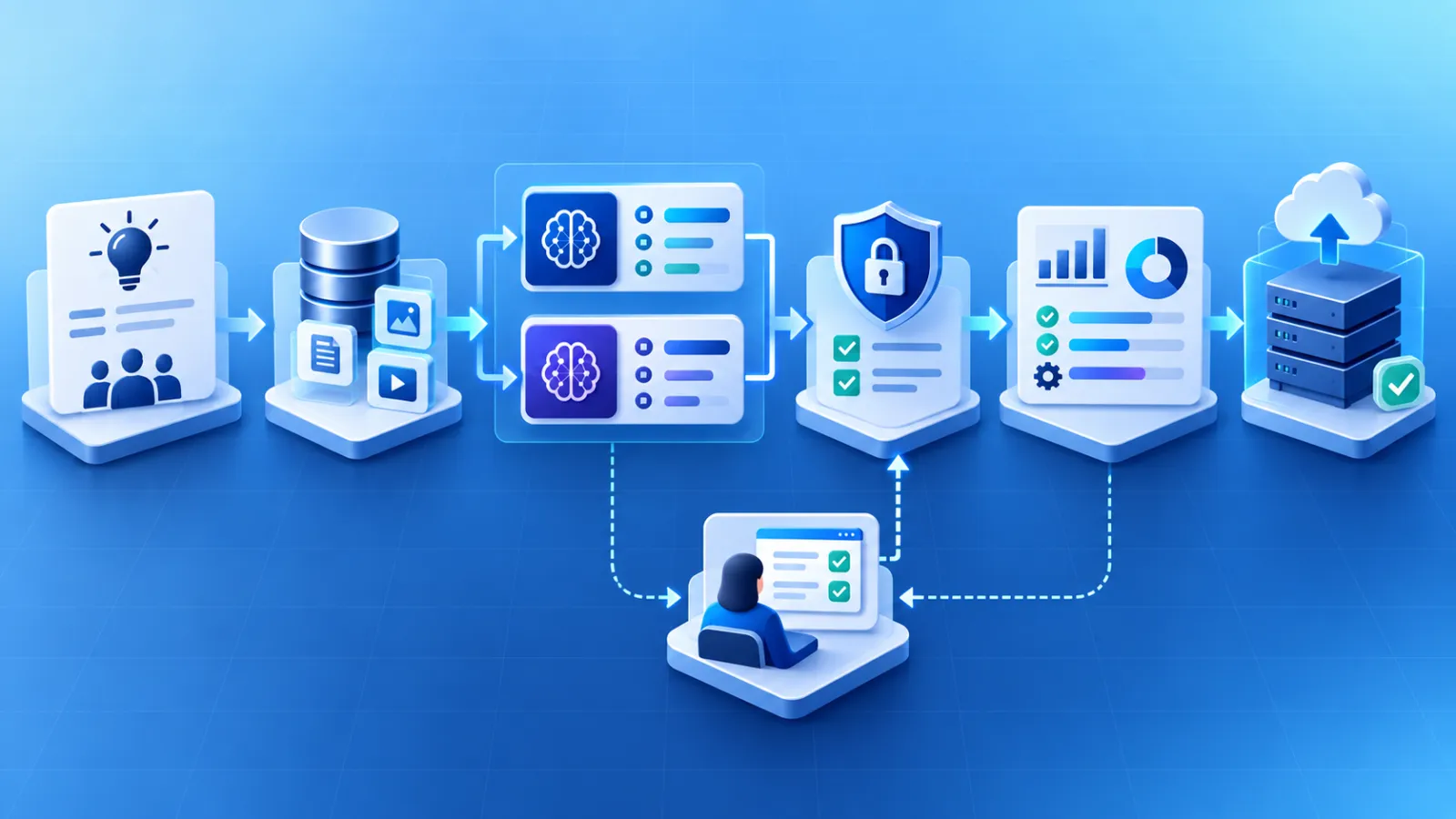
Production automation may need retrieval, data permissions, API integrations, queues, retries, structured-output validation, approval workflows, audit logs, monitoring and fallback models.
5. Calculate workflow economics
Include model calls, cached context, tools, retries, engineering, monitoring and human review. A cheaper model that needs fewer corrections can outperform a stronger model with a higher operating burden—and the reverse can also be true.
When should a business test both?
Test both when the workflow has material business impact, runs at significant volume, processes complex documents, uses multiple systems or makes small accuracy differences financially meaningful. The organization must also have authorized Mythos access.
Build a representative evaluation set from appropriately protected real data. Run both models with equivalent tools, instructions, permissions and stopping conditions. Have qualified reviewers score the results without knowing which model produced them.
DevGlim’s free AI Workflow Assessment can help identify a practical first workflow and the controls it needs.
Which model is better?
There is no defensible universal winner for business AI automation.
GPT‑6 Astra has the practical advantage of broader availability and an extensive tool ecosystem. Claude Mythos 5.1 may be relevant to approved organizations with specialized security or scientific requirements. For most companies, Claude Fable 5.1 or Claude Opus 5.5 is the more actionable Anthropic comparison.
The correct choice depends on accuracy, latency, cost, access, governance and integration requirements. A controlled pilot using your own data is more useful than a general benchmark leaderboard.
How DevGlim can help
DevGlim builds custom AI agents and business automation systems around real workflows, APIs, CRM data, documents, permissions and human approvals. We can help evaluate suitable models, prototype a high-value workflow and build the surrounding software required for controlled production use.
The goal is not to force one model into every task. It is to create an automation system that remains measurable, auditable and maintainable as models change.
Frequently asked questions
Is Claude Mythos 5.1 publicly available?
No. Anthropic lists Mythos 5.1 as active but invite-only. Access is limited to vetted organizations and trusted-access programs.
Do GPT‑6 Astra and Claude Mythos 5.1 cost the same?
Their standard API prices are both listed at $10 per million input tokens and $50 per million output tokens. Caching, long-context pricing, token usage, tools, retries and batch processing differ, so actual workflow costs may not be equal.
Which is better for CRM automation?
There is no universal winner. Test record extraction, tool-call accuracy, permissions, duplicate handling, escalation, latency and cost using your CRM schema and workflows.
Which is better for processing long documents?
Both advertise context windows around one million tokens and outputs up to 128,000 tokens. Document accuracy, evidence handling, tokenization, caching and long-context pricing should be tested on your documents.
Should an AI model directly update business systems?
Not without safeguards. Production systems should validate structured outputs, check authorization, prevent duplicate actions, record an audit trail and require human approval for consequential operations.
Official sources
• OpenAI: GPT‑6 Astra announcement
https://openai.com/index/gpt-6-astra/
• OpenAI API: GPT‑6 Astra model documentation
https://developers.openai.com/api/docs/models/gpt-6-astra
• OpenAI: GPT‑6 model guidance
https://developers.openai.com/api/docs/guides/latest-model
• Anthropic: Claude Mythos overview
https://www.anthropic.com/claude/mythos
• Anthropic: Fable 5.1 and Mythos 5.1 specifications
https://platform.claude.com/docs/en/models/fable-5-1/overview
• Anthropic API pricing
https://platform.claude.com/docs/en/about-claude/pricing
• Anthropic model-selection guidance
https://platform.claude.com/docs/en/about-claude/models/choosing-a-model
• Anthropic: Project Glasswing
https://www.anthropic.com/glasswing
Related DevGlim resources
AI automation and custom software services
https://devglim.com/services/ai-solutions
Custom AI agent development
https://devglim.com/services/ai-agent-development
AI workflow automation services
https://devglim.com/services/ai-workflow-automation
AI workflow assessment
https://devglim.com/tools/ai-workflow-assessment