AI Workflow Automation for Businesses: Use Cases, Costs and Implementation
A practical guide to AI workflow automation for businesses, including use cases, implementation steps, human oversight, integrations, and cost factors.
DevGlim Team
September 26, 2026

Looking to build this instead of buying it? See our AI Workflow Automation service →
AI workflow automation connects business rules, software integrations, and artificial intelligence to reduce repetitive work. The strongest projects automate predictable steps while keeping people involved when judgement, approval, or customer care is required.
What is AI workflow automation?
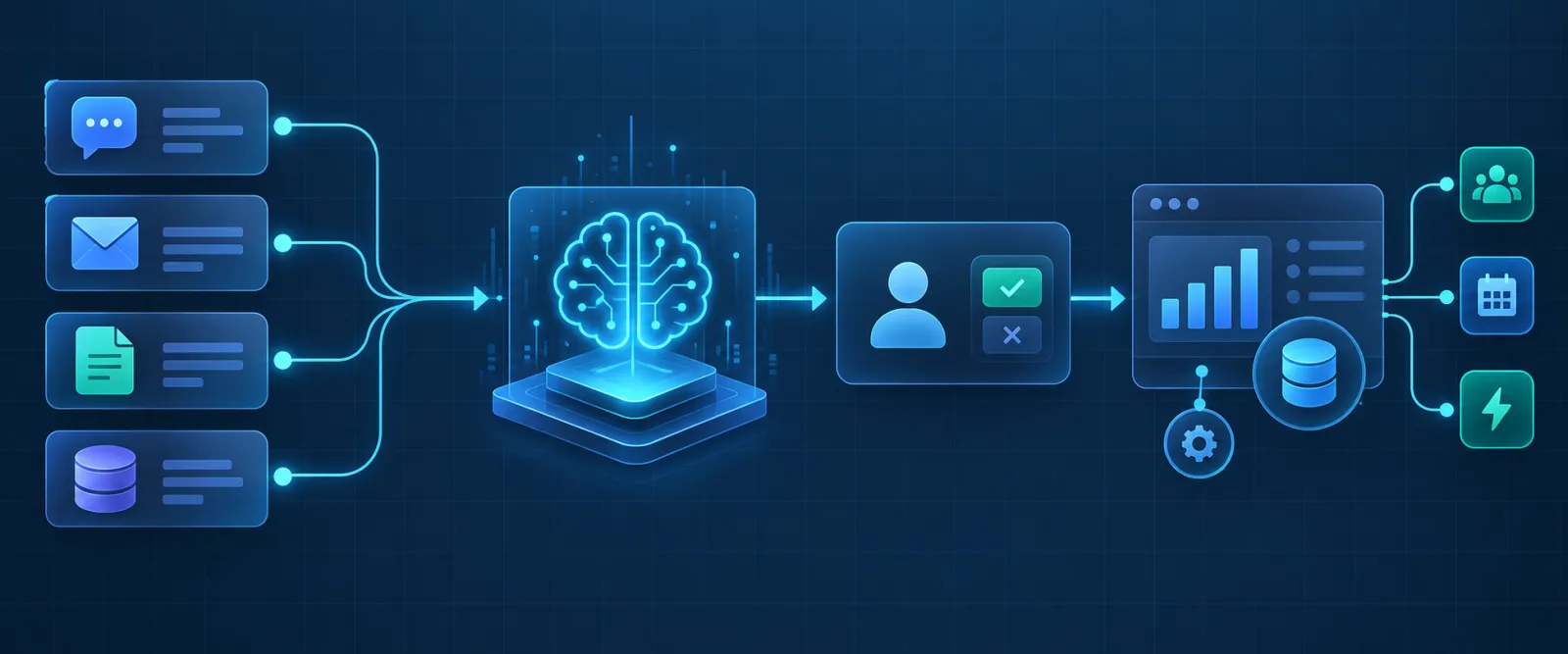
AI workflow automation is a process in which software receives information, interprets it, takes an approved action, and records the result. It can connect email, a CRM, documents, internal systems, messaging tools, and an AI model.
Business processes that are good candidates
Lead intake and qualification; customer support triage; document classification; internal approvals; CRM data cleanup; meeting summaries; and order or inventory updates. Start with a frequent, consistent process with a measurable outcome.
AI automation versus traditional automation
Traditional automation works well when inputs and rules are predictable. AI adds value when a workflow must interpret language, documents, intent, or unstructured information. Strong systems use rules for permissions and routing, and AI for classification, extraction, or drafting.
How an AI automation project works
- Map the current workflow. Document triggers, systems, decisions, exceptions, and people.
- Select one measurable use case. Define the baseline and expected outcome.
- Design controls and human handoffs. Set approval, escalation, logging, and fallback rules.
- Integrate and test. Test normal and unusual cases and prevent duplicate or unauthorised actions.
- Monitor and improve. Review accuracy, exceptions, response time, and user feedback.
How much does AI workflow automation cost?
Cost depends on workflows, integrations, data sources, user roles, security requirements, interfaces, testing, and ongoing support. A credible estimate separates discovery, design, development, integration, testing, deployment, third-party software, model usage, and maintenance.
Questions to ask before starting
What outcome will improve? What information is required? Which decisions require approval? What happens when the AI is uncertain? How will errors be corrected? Which system is the source of truth? How will success be measured?
Plan your automation with DevGlim
DevGlim helps businesses evaluate workflows, connect existing systems, and build AI-assisted automation around real operating requirements.